The Cameron Highlands: A Fragile Paradise in the Malaysian Clouds
I first heard about the Cameron Highlands in a way that felt almost accidental. Years ago, I was in the sweaty, glorious chaos of Kuala Lumpur, planning a trip north to Penang. Over a plate of char kway teow, a fellow traveller, her skin sun-kissed and her eyes bright, leaned in and said, “You’re going to Penang? You have to stop in the Highlands. It’s like someone cut out a piece of England and pasted it into the middle of the jungle.” I was sceptical. Why would I travel to Malaysia for a slice of England? But the promise of cool air—a genuine, shiver-inducing chill—after weeks in the equatorial furnace was too tempting. So, I took a winding, nausea-inducing bus ride up the old road, and what I found wasn’t England at all. It was something far more complex, beautiful, and troubling.
The Cameron Highlands is a district in Pahang, Malaysia, perched between 1,100 and 1,800 meters above sea level. Discovered (or, more accurately, mapped and named) by British surveyor William Cameron in 1885, its true transformation began in the 1920s and 30s. The British colonial administration saw its potential as a sanatorium—a cool retreat from the lowland heat—and later, as a productive agricultural centre. They introduced tea, of course, but also strawberries, vegetables, and flowers, forever altering the landscape. Today, it’s a mosaic of colonial nostalgia, intensive farming, and booming tourism, all clinging to steep, misty hillsides. It’s a place where you can sip a scone with clotted cream in a Tudor-style cottage in the morning and hike through mossy, ancient rainforest by afternoon.

How the Highlands “Work”: An Ecosystem on a Knife’s Edge
Technically speaking, the Cameron Highlands isn’t a single entity but a delicate, interconnected system. It works—or struggles to work—based on a few key principles:
1. The Orographic Effect: This is the engine of the climate. Moist air from the lowlands is forced up the steep slopes of the Titiwangsa Range. As it rises, it cools, and the water vapour condenses into the iconic, persistent mist and rainfall. This constant moisture is what created the lush montane forests and what allows for agriculture without tropical heat stress.
2. The Human Engine: The colonial and post-colonial agricultural model imposed a new template. Vast swathes of native forest were cleared for terraced farms. The highlands became Malaysia’s “salad bowl,” producing an estimated 60-70% of the nation’s temperate vegetables. This was achieved through intensive farming: heavy use of fertilisers and pesticides, plastic rain shelters, and, most damagingly, widespread land clearing. The tourism engine followed, with hotels, roads, and strawberry farms carving further into the hills.
3. The Hydrological System: The highlands are the “water tower” for central Peninsular Malaysia. Its forests act as a giant sponge, absorbing rainfall and releasing it slowly into the rivers that feed lowland populations and agriculture. When the forest is stripped, this system breaks down.
The problem is that Principles 2 and 3 are in direct, violent conflict with Principle 1. The steep slopes, when denuded of their forest anchor, become catastrophically unstable. The heavy rainfall, instead of being absorbed, becomes a destructive force.
Real-World Applications: From Tea Cup to Landslide
The applications of the Cameron Highlands are lived every day. It’s not a lab experiment; it’s a real place with real consequences.
- Food Security: Drive from Tanah Rata to Brinchang and you’ll pass endless farms under white plastic shrouds, growing cabbage, tomatoes, and bell peppers. This is the most direct application: feeding a nation. The cool climate allows for year-round production of crops that would struggle elsewhere.
- Tourism & Escapism: For Malaysians and Singaporeans, it’s a beloved weekend getaway. For international travellers, it’s a scenic stop on the tourist trail. The applications here are leisure: strawberry-picking, tea-tasting tours, jungle trekking, and simply enjoying a fireplace in July.
- Cultural Preservation: Places like the Boh Tea Plantation or the Cameron Bharat Tea Estate are living museums of colonial agricultural history. The tea-plucking process, though modernised, follows a century-old rhythm. Visiting the Sungai Palas Boh Tea Centre, watching the factory process through viewing windows with the stunning valley as a backdrop, is a masterclass in agro-tourism.
- A Case Study in Environmental Stress: Sadly, the most potent modern application of the Cameron Highlands is as a stark case study in unsustainable development. Read the local news for a week, and you’ll likely see a report on a landslide blocking the main road, or a water disruption due to siltation in the rivers. In 2013, a massive landslide in Ringlet buried a hostel, claiming lives. These aren’t abstract “disadvantages”; they are the direct, real-world outputs of a system pushed beyond its limits.
The Bitter with the Sweet: Advantages and Inescapable Disadvantages
Advantages:
- Climate: The cool, crisp air is its primary draw. It’s a physiological relief and allows for unique agriculture.
- Scenic Beauty: The rolling green tea terraces, especially at sunrise when the mist clings to the valleys, are undeniably breathtaking.
- Biodiversity: The remaining montane forests are treasure troves, home to rare species like the Malayan porcupine, mountain peacock-pheasant, and countless endemic pitcher plants and orchids.
- Cultural Tapestry: It’s a fascinating blend of Malay, Chinese, Indian, and indigenous Orang Asli communities, each with a distinct relationship to the land.
Disadvantages:
- Environmental Degradation: This is the overwhelming shadow. Deforestation for farming and development leads to soil erosion, landslides, river siltation, and pollution from agricultural runoff.
- Overtourism: On weekends and holidays, the narrow roads become parking lots. The charm of a quiet highland retreat is often shattered by traffic gridlock.
- Aesthetic Pollution: The unchecked sprawl of concrete hotels and the sea of white plastic farm shelters can mar the very beauty people come to see.
- Water Issues: Siltation and pollution affect water quality for downstream users, creating regional tension.
A Personal Reckoning: Hikes, Wrong Turns, and Quiet Moments
My relationship with the highlands has evolved over multiple visits. On that first trip, I did the tourist checklist: the tea plantation, the butterfly farm, the strawberry farm. It was pleasant, but shallow.
It was on a later, solo trip that I connected more deeply. I decided to hike from Tanah Rata to the Gunung Jasar viewpoint. The trail began innocuously but soon plunged into proper, dense mossy forest. The air grew cooler, the sound of traffic vanished, replaced by the drip of water and strange bird calls. I was utterly alone. For two hours, I saw no one. When I emerged at the viewpoint—a rocky outcrop overlooking a sea of clouds that hid the valleys below—the sense of isolation and pristine beauty was profound. This, I realised, was the true heart of the highlands, and it was shrinking.
I’ve also made mistakes. Once, I hired a cheap, unofficial “guide” for a jungle trek. He spent more time pointing out where we could shortcut to a roadside than explaining the ecology. We ended up at a sad, trash-strewn waterfall crowded with loud picnickers. I learned that if you’re going to engage with the jungle, do it properly. Book with a reputable outfit like Cameron Highlands Trekking or go with a recommended guide who respects the trails. The difference between a transactional walk and an educational experience is vast.

The Alternatives: Fraser’s Hill and Beyond
People often ask: “If Cameron Highlands is so crowded, is there an alternative?”
The most direct comparison is Fraser’s Hill, another British hill station a couple of hours south. Fraser’s is quieter, smaller, and feels more preserved. Its development was more restrained. The trade-off? Far fewer amenities, less dramatic scenery (no vast tea estates), and a sleepier, almost time-warped vibe. It’s for those who truly want peace and birdwatching. For the full experience with tea, strawberries, and a wider range of hikes, Cameron’s still reigns, for better or worse.
Further afield, Bukit Larut (Maxwell Hill) near Taiping is even more rustic, accessible only by government Land Rover. Each offers a different version of the hill-station concept, but none have the scale or agricultural-economic clout of the Cameron Highlands. That scale is precisely its blessing and its curse.
Common Pitfalls and How to Navigate Them
Pitfall: Chasing the Instagram Shot. Everyone wants the perfect tea plantation photo. This leads to overcrowding at the most famous spots (Sungai Palas) at midday.
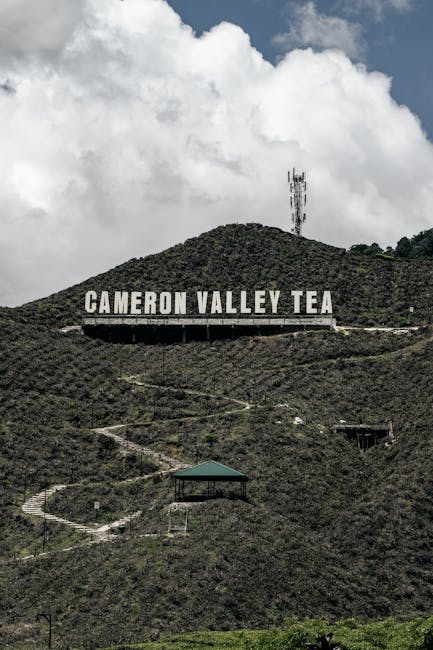
- Avoidance: Go to a lesser-known estate like the Cameron Valley Tea House for a more intimate experience. Or, visit the popular ones at opening time (8-9 am) when the light is soft and the crowds are thin.
Pitfall: Underestimating the Terrain and Climate.
- Avoidance: The jungle trails can be slippery and steep. Wear proper shoes, not flip-flops. Bring a light rain jacket always. The weather shifts in minutes. Never hike alone on unfamiliar trails—people do get lost.
Pitfall: Supporting Unsustainable Practices.
- Avoidance: Be a conscious consumer. Choose tours that emphasise ecology over mere sightseeing. Eat at local restaurants in Tanah Rata rather than only at hotel buffets. When buying strawberries, ask if they’re from a local farm. Your ringgit is a vote.
Pitfall: Weekend Mayhem.
- Avoidance: If you can, visit mid-week. The difference in traffic, hotel rates, and overall atmosphere is night and day.
The Future: Re-greening or a Tipping Point?
The future of the Cameron Highlands hangs in the balance. The authorities know the problems. There are now more visible efforts: replanting projects on eroded slopes, stricter (though often poorly enforced) regulations on land clearing, and campaigns promoting responsible tourism.
The real change, I believe, needs to be economic. The model of “more farms, more hotels, more tourists” is a dead end—literally, as the land gives way. The future has to be one of value over volume. This means:
- High-Value, Low-Impact Agriculture: Investing in vertical farming, organic practices, and premium branding for highland produce to reduce the need for constant land expansion.
- Eco-Tourism Premium: Positioning the highlands as a destination for genuine nature and cultural immersion, not just coach tours and strawberry trinkets. This means protecting and marketing the incredible Mossy Forest not as a side-attraction, but as a primary, fragile wonder.
- Empowering Stewards: Involving the local communities, including the Orang Asli, as partners in conservation and tourism, ensuring they benefit from preserving the forest, not just from clearing it.
The Cameron Highlands taught me that paradise is not a static postcard. It’s a living, breathing negotiation between human need and natural law. You can feel that tension in the cool air—a sweetness laced with the faint scent of damp earth and, if you listen closely, the distant groan of a overburdened hillside. It remains one of the most compelling places I’ve been, not because it’s perfect, but because its struggles and its beauty are so visibly, heartbreakingly intertwined. To visit is to witness a masterpiece under repair, and to be faced with a quiet question: will we be part of the restoration, or the final brushstroke that overwhelms the canvas?