Standing in the Sun: What Christ Church Melaka Teaches Us About Time, Trade, and the Colour Red
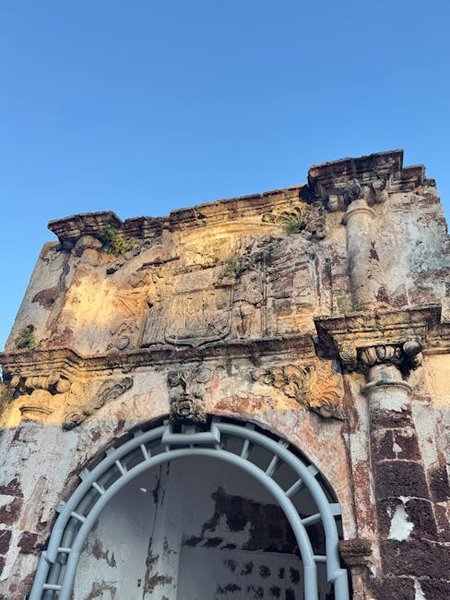
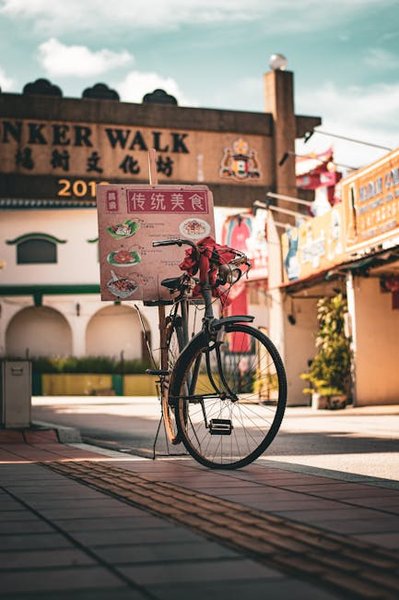
I remember the first time I saw it, and I suspect most people do. You’ve wandered through the dense, humid lanes of Jonker Street, past the hawker stalls and antique shops, the air thick with the scent of chendol and history. Then, you turn a corner, and the world opens up. There it is, sitting with a quiet, monumental dignity in the centre of the Dutch Square: Christ Church Melaka. Its terracotta-red walls seem to glow from within, a stark, beautiful contrast against the impossibly blue Malaysian sky and the dark green of the hill behind it. It doesn’t feel like a building you simply visit; it feels like a presence you encounter.
My fascination with this place began not as a historian’s, but as a traveller disoriented by layers. Melaka is a palimpsest—a city where cultures have been written, rewritten, and layered upon each other for centuries. In the middle of it all, Christ Church acts as a kind of anchor, a physical point from which you can begin to untangle those threads. Over many visits, from hurried tourist stops to long, contemplative afternoons sitting on its steps, I’ve come to see it not just as a beautiful old church, but as a masterclass in endurance, adaptation, and the very human stories etched into stone and timber.
A Church Built by Conquerors, on the Shoulders of Giants
To understand Christ Church, you must first understand the ground it stands on. The hill behind it, St. Paul’s Hill, was the original epicentre. There, the Portuguese built a fortress (A Famosa) and a church, the Igreja de Nossa Senhora da Annunciada (Our Lady of the Annunciation), later known as St. Paul’s Church. When the Dutch wrested control of Melaka in 1641 after a brutal siege, they found the Portuguese church atop the hill in ruins. For a time, they used its shell, but the location was impractical for a growing colonial administration. The hill was for defence and the dead (the old church became a burial ground for the Dutch elite). The living needed a church in the heart of their new town.
So, between 1741 and 1753, the Dutch East India Company (VOC) built Christ Church. This is the first crucial insight: it was a civic statement as much as a religious one. The VOC was a trading corporation, arguably the world’s first multinational. This wasn’t a cathedral funded by a diocese; it was infrastructure funded by a company to serve its employees, soldiers, and settlers, and to project Dutch Calvinist power in a predominantly Catholic (from the Portuguese) and multi-ethnic Asian port.
The building itself is a testament to pragmatic colonial engineering. They used bricks shipped as ballast in Dutch ships from Zeeland, bound with a mortar made from local limestone, egg whites, and sand—a recipe for remarkable durability. The roof beams, each over 15 meters long, were carved from a single type of wood, likely local merbau or cengal, and are still original. The architecture is a simplified, austere Dutch Colonial style: a long rectangular nave, massive walls, and a Dutch roof. But look closer. The ceiling inside is shaped like an upturned ship’s hull. Some say this was a nod to the shipwrights who built it; I’ve always felt it was an unconscious metaphor—this was an outpost of a seafaring nation, a spiritual vessel beached far from home.
The Mechanics of Memory: How a Building “Works”
Christ Church “works” on several levels. Architecturally, its design is a response to climate and context. The thick walls provide insulation against the tropical heat. The high ceilings and large windows (original to the design) promote air circulation. Its location in the town square placed it at the administrative and social heart of Dutch Melaka, adjacent to the Stadthuys (the town hall, now a museum).
But its real “mechanism” is as a narrative device. It functions as a three-dimensional timeline. Start outside. The red paint, now synonymous with Dutch buildings in Melaka, wasn’t original. The Dutch typically whitewashed their buildings. The red oxide paint came later, during the British period in the 19th century. So, the very colour that defines it is a later historical layer.
Step inside, and the timeline continues. The floor is paved with granite slabs, under which lie the tombs of Dutch aristocrats and officials. You are literally walking on history. The memorial plaques on the walls, written in Portuguese and Armenian, speak of communities that predated the Dutch. Then, look at the pews. They are solid, dark wood, but note the ends: some are carved with floral motifs, others are simpler. These are original, and the variation hints at different craftsmen or periods of installation.
The most poignant “working part” is the altar. Above it, in beautiful script, is the text from John 14:6: “I am the way, the truth, and the life.” It’s in Malay, but written in the Jawi script (Arabic-derived). This was added by the British, who took over Melaka in the early 1800s. They made it an Anglican church and, in a move of surprising cultural sensitivity for the colonial era, commissioned this translation to serve the local congregation. So, in one room, you have a Dutch structure, with British modifications, presenting a Christian text in the Islamic-derived script of the Malay language. It’s a perfect, quiet encapsulation of Melaka’s layered identity.
Applied History: The Church in the Modern World
Today, Christ Church is no longer just a place of worship (though Sunday services in English, Chinese, and Malay are still held). Its primary application is as a teacher. It’s the centrepiece of the Melaka UNESCO World Heritage site, and it functions as a living classroom on several subjects:
- Colonial History: It’s the best-preserved Dutch building in the East, offering a tangible connection to the 18th-century VOC world.
- Architectural Adaptation: It shows how European designs were modified for a tropical environment, a principle that influenced later Straits Settlements architecture.
- Cultural Synthesis: The Jawi script on the altar is a masterstroke for discussing cultural exchange and adaptation. It prompts questions about translation, power, and faith in a cross-cultural context.
- Tourism & Conservation: It’s a case study in the challenges of heritage management. How do you preserve a 270-year-old brick structure in a humid climate with thousands of visitors daily? The slight wear on the pews, the careful restoration of the roof—these are all practical lessons in conservation.
I once overheard a local guide telling a group, “This church is like rojak,” referring to the local fruit salad with a sweet, sour, and spicy sauce. “Many different ingredients, from different places, come together to make something unique to Melaka.” It was the most apt description I’ve ever heard.
The Weight of Beauty: Advantages and Inevitable Challenges
The advantage of Christ Church is its potent authenticity. It’s not a reconstruction. The wood you touch, the floor you walk on, has been there for centuries. This creates an irreplaceable sense of connection. Its location is also perfect—it’s the visual and historical anchor for the entire Dutch Square, creating a photogenic and comprehensible historic precinct.
However, this comes with significant disadvantages, primarily the tyranny of its own popularity. On a busy weekend, the square is a sea of people. The quiet dignity of the church can be shattered by the noise of crowds, trishaws blasting pop music, and the constant click of cameras. The sheer volume of visitors (over 2 million a year pre-pandemic) puts immense stress on the fabric of the building. Humidity from breath, the micro-vibrations from constant footfall, and the temptation for visitors to touch surfaces all contribute to a slow, steady decay.
Furthermore, its static nature can sometimes render it a “checkpoint” rather than a place of contemplation. People come, take a photo with its iconic red facade, and move on, missing the nuanced stories inside. The challenge for conservators and guides is to help visitors see beyond the postcard image.
A Personal Chronicle: Lessons from the Steps
I’ve visited Christ Church in every conceivable mood and context. On a blisteringly hot Tuesday afternoon, I had it almost to myself. I spent an hour just reading the tomb inscriptions, struck by the young ages of many of the Dutch buried there—men and women in their 20s and 30s, felled by tropical disease far from the canals of Amsterdam. The building felt less like a monument and more like a communal grave, a sobering reminder of the human cost of empire.
Another time, I came during a light evening drizzle. The red bricks turned a deep, sanguine crimson, and the square emptied. Sitting under the porch, watching the rain darken the cobblestones, the church felt protective, almost domestic. It was easy to imagine a Dutch merchant 250 years ago standing in this same spot, waiting for the rain to pass, smelling the wet earth and the sea air, feeling a similar mix of awe and loneliness in this distant port.
My most profound lesson came from a mistake. On an early visit, I rushed through. I saw the red facade, went inside, glanced around, and left, satisfied I’d “done” it. It was only on subsequent, slower visits that I began to see: the variation in the roof tiles, the different styles of the memorial plaques, the way the light moves across the interior at different times of day. The mistake to avoid here is treating Christ Church as a mere photo opportunity. The best practice is to give it time. Sit. Return at different hours. Go inside and don’t just look at the altar—look at the floor, the ceiling, the joints in the wood. Read one plaque thoroughly instead of skimming twenty.
Not the Only Story: Comparisons and Context
Christ Church is often compared to St. Paul’s Church on the hill above it. The comparison is instructive. St. Paul’s is a ruin—a roofless, evocative shell filled with old tombstones, open to the sky and the wind. It’s atmospheric, poetic, and speaks of decay and the relentless passage of time. Christ Church, by contrast, is complete, maintained, and functional. It speaks of institutional endurance and adaptation. One is a melancholy poem; the other is a lived-in, if aging, house. You need both to understand the full story. St. Paul’s shows what was lost; Christ Church shows what was preserved and repurposed.
You could also compare it to other colonial-era churches in the region, like St. George’s Church in Penang (also Anglican, but built by the British in a different style). What makes Christ Church unique is its unbroken chain of utility and its layered aesthetic signatures—Dutch structure, British colour, multicultural inscriptions.
Looking Ahead: The Church in the 21st Century
The future of Christ Church Melaka is one of careful stewardship. The threats are clear: climate change (increased rainfall and humidity), overtourism, and the natural aging of its materials. The solution isn’t to put it under glass. A building like this needs to breathe and be used to stay alive.
The outlook, I believe, involves smart conservation and deepened interpretation. This might mean:
- Implementing more sophisticated visitor flow management, perhaps with timed entries during peak periods to reduce internal crowding.
- Using non-invasive technology—like subtle climate monitoring sensors or augmented reality apps that can show historical overlays without damaging the fabric—to enhance understanding.
- Continuing and expanding the narrative to include not just the Dutch and British stories, but also those of the local Malay, Chinese, Indian, and Peranakan communities who have lived alongside and worshipped in this space for generations. Whose history does it really tell?
The goal should be to transition from presenting Christ Church as a static relic to framing it as an active witness—a silent participant in Melaka’s ongoing story, from a colonial trading post to a bustling modern city in a multicultural nation.
Final Thoughts: An Anchor in the Stream of Time
Leaving Christ Church, I often take one last look back from the bridge over the Melaka River. From there, you see the full panorama: the rusty-red roof of the church, the white cupola of the Stadthuys clock tower, the lush green hill, and the modern city sprawling beyond. The church sits firmly in the middle, a hinge between the past and the present.
It has survived sieges, changes of empire, wars, and the relentless tropical sun. Its greatest lesson isn’t about architecture or history in an academic sense. It’s about resilience through adaptation. It was built for one purpose (a Dutch Reformed church), adapted for another (an Anglican church), and now serves a third (a heritage monument and teacher). It absorbed each change, adding a new layer without completely erasing the old. The Portuguese tombstones in its walls, the Jawi script on its altar—these aren’t inconsistencies; they are the record of its life.
Christ Church Melaka doesn’t ask for reverence. It simply stands there, solid and red, in the ever-changing square. It reminds us that places, like people, are not defined by a single identity, but by the accumulation of all they have witnessed and absorbed. In a world that often demands simple stories, it is a beautifully complex, silent testament to the fact that the most enduring things are often those that learn how to change.