Living on Water: The Enduring Legacy of Penang’s Clan Jetties
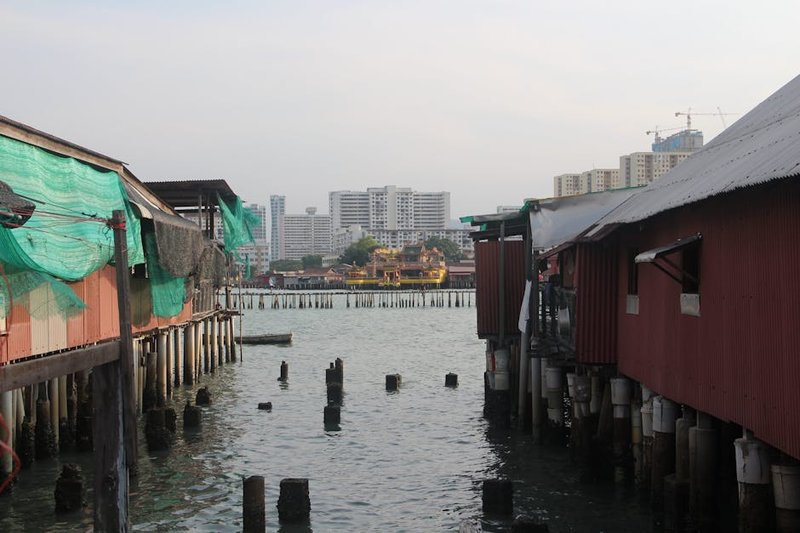
I first stumbled upon the Clan Jetties of Penang not through a guidebook, but through a smell. It was a humid, heavy afternoon, and I was wandering the backstreets of George Town, a little lost. The air, thick with the scent of frying noodles and exhaust, suddenly shifted. A new layer emerged: salt, wet wood, and the faint, briny perfume of the sea. Following that olfactory trail, I turned a corner and the cityscape fell away, replaced by a narrow wooden walkway stretching out over the tidal mudflats. On either side, houses on stilts huddled together, painted in faded blues, greens, and rust-reds. I’d found Chew Jetty, and in doing so, stepped into a living, breathing chapter of Malaysian history that refuses to be relegated to the past.
For over a century, these jetties have been more than just a tourist attraction; they are homes, communities, and a testament to a specific form of adaptive urban living. My initial visit turned into a fascination, and that fascination led to repeated trips, long conversations with residents, and a deep appreciation for the delicate balance these communities maintain. They are a masterclass in vernacular architecture and social cohesion, but they’re also a case study in the pressures of modernity, tourism, and environmental change. This isn’t just about houses on stilts; it’s about how a community built itself from the water up.
From Sojourners to Settlers: The Historical Anchors
To understand the Clan Jetties, you have to rewind to the late 19th century. Penang was a booming Straits Settlement, a magnet for Chinese immigrants, primarily from the Fujian province. These weren’t settlers planning to put down roots; they were sojourners—men who came to Guangdong (make a fortune) with every intention of returning home wealthy. They needed cheap, practical housing close to the port where they labored as dockworkers, fishermen, and traders.
The solution was as pragmatic as it was ingenious: build out onto the sea. The tidal flats were unwanted land, free from the control of colonial authorities or local landowners. Using simple materials—hardwood for the pilings, planks for the walkways, attap (palm thatch) and later corrugated zinc for roofs—they constructed entire villages over the water. Crucially, they organized themselves by clan, or family association, based on their surnames and regions of origin in China. This gave us the Chew Jetty, the Lee Jetty, the Tan Jetty, and others. Each jetty became a self-contained support system. The clan association provided aid, settled disputes, and maintained the shared infrastructure of the walkway and temple. Your address wasn’t just a location; it was your lineage.
This wasn’t a planned development. It was organic, growing house by house, family by family, in a haphazard yet logical sprawl. The houses extended further out on sturdy belian (ironwood) piles, with some families even building small private piers for their boats. The space underneath the houses, exposed at low tide, was used for storage, repairs, and keeping livestock. At high tide, the community was literally floating. This created a unique relationship with the environment—one of constant negotiation with the tides, the monsoon rains, and the corrosive power of seawater.
The Anatomy of a Water Village: More Than Just Stilts
On the surface, a Clan Jetty looks simple. Walk down the main plank walkway, peek into the open-fronted houses, see the souvenirs for sale. But living there reveals a complex, finely-tuned system. The first thing you learn is the rhythm of the tides. Your day is structured around it. Low tide brings the unmistakeable smell of the mudflat—earthy and rich—and the sight of the intricate wooden skeleton of the jetty. Kids might play on the exposed sand, and maintenance becomes possible. High tide cleanses, brings cooler air, and transforms the jetty into a serene offshore island, the water lapping just below the floorboards.
The construction is a lesson in passive adaptation. The houses are aligned to catch the sea breeze, a natural air-conditioning system essential in the tropical heat. The gaps between floorboards allow for ventilation and for minor tidal flooding to drain away. The buildings are lightweight, reducing the load on the piles. The real engineering marvel, however, is hidden: the pilings. Driving these into the seabed was a herculean task done manually. Their preservation is constant. I remember an old resident, Mr. Lim on Tan Jetty, tapping a piling with his knuckles. “You listen,” he said. “Solid tok tok sound, good. Hollow or soft, trouble. The teredo (shipworm) never sleeps.” Regular inspection and replacement of pilings is the single most critical maintenance task, a never-ending battle against marine borers and rot.
Privacy and community exist in a unique balance. The front of the house is often open to the walkway—a “five-foot way” over water—encouraging conversation. Life is visibly communal. But step inside, and many houses extend back dramatically, with inner rooms, upper lofts, and back verandas overlooking the sea, offering retreat. The temple at the end of each jetty isn’t just for worship; it’s the community’s anchor, both spiritually and physically, often the most solid and ornate structure.
The Double-Edged Sword of Preservation and Tourism
The Clan Jetties faced existential threats in the latter half of the 20th century. As Penang modernized, they were seen as unsanitary slums, fire hazards, and obstacles to development. There were plans for clearance. What saved them was a combination of things: their undeniable cultural significance, the stubbornness of the residents, and, ironically, tourism.
UNESCO’s listing of George Town as a World Heritage Site in 2008 was a turning point. The jetties were recognized as a key part of the city’s “unique cultural landscape.” Overnight, they went from endangered relics to must-see attractions. Chew Jetty, the largest and most accessible, bore the brunt of this transformation. Walking down its main artery now, you’re flanked by souvenir stalls selling keychains and t-shirts, cafes, and ice cream stands. The constant flow of visitors is both a lifeline and a nuisance.
I’ve seen this tension firsthand. One family on Chew Jetty runs a successful drinks stall. The income allowed them to refurbish their ancestral home beautifully, installing modern plumbing and wiring. Their neighbor, an elderly woman, finds the crowds overwhelming and has strung up a curtain across her front door for privacy. “Before, we knew every footstep,” she told me. “Now, it’s just noise.” The economic benefits are uneven. Houses on the main walkway thrive; those down the narrower side lanes see little of the tourist dollar.
The lesson here is that preservation isn’t a static act. It’s a dynamic, often contentious process. Turning a living community into a heritage exhibit risks fossilizing it or, worse, turning it into a theme park version of itself. The best practices I’ve observed come from jetties like the Tan Jetty or the Yeoh Jetty, which have chosen a quieter path. They may have a small sign or a family selling simple snacks, but they’ve largely resisted commercialisation. They actively control access, sometimes politely asking large tour groups not to enter. Their preservation is social and architectural, not commercial. They understand that their primary function is as a home, and that this authenticity, in the long run, is their most valuable asset.
Common Pitfalls: What Gets Lost in Translation
Many visitors, and indeed planners, make crucial mistakes when engaging with places like the Clan Jetties.
The “Open Museum” Fallacy: Treating the jetty as a free-access museum disrespects the residents. Walking into someone’s open doorway to take a photo without permission is a profound intrusion. The best practice is to be visibly respectful, move quietly, and ask before photographing people or interiors. A smile and a point to your camera is usually enough.
Ignoring the Invisible Infrastructure: The focus is always on the charming houses. But the real story is underneath. The decay of the shared walkway, the sewage and waste management (historically directed straight into the sea, now a major issue), and the freshwater supply are the critical, unglamorous challenges. Any preservation effort that doesn’t fund and prioritize this hidden infrastructure is just putting a fresh coat of paint on a sinking ship.
Romanticizing Poverty: It’s easy to see the “rustic charm” and miss the real hardships: the lack of space, the fire risk, the difficulties of getting groceries or moving furniture down a narrow plank walkway. Modern residents want Wi-Fi, washing machines, and safety. Successful adaptation, like the adaptive reuse of shophouses in George Town, must allow for modern comforts without erasing historical character.
The Future: Riding the Next Wave
The future of the Clan Jetties is as uncertain as the sea they’re built upon. Climate change poses a direct threat. Rising sea levels and more intense storms could make them uninhabitable. I’ve spoken to younger residents who are pragmatic. They love their home but wonder about its viability. Some talk about raising the entire jetty structure, a monumental and costly task.
The demographic shift is another tide to navigate. The younger generation often moves away for education and jobs. Without a new generation to maintain the houses and the social fabric, the jetties risk becoming empty shells. The most hopeful projects I’ve seen involve this younger generation returning with new ideas. A graphic designer on Chew Jetty created beautiful, culturally-sensitive maps of the community. A family on Lee Jetty started a small, appointment-only cultural tour that explains their family history, not just the architecture.
The Clan Jetties won’t survive as they were in 1920. Nor should they. Their genius was always adaptation. The next adaptation might involve community trusts to manage tourism revenue for shared infrastructure, or innovative engineering solutions for flood mitigation. Their survival depends on being allowed to evolve as living communities, not being frozen as historical dioramas.
Walking back along a jetty at dusk, as the day-trippers leave and the community reasserts itself, is a magical experience. The clatter of dishes comes from kitchens, old men sit on stools smoking, the water turns a deep indigo. The jetty creaks and sighs, a living organism. It reminds me that the greatest lesson the Clan Jetties offer is about resilience and identity. They were built by people who were, initially, rootless. In response, they built roots not in soil, but in the seabed, and in each other. They created a place that is unmistakably, resiliently theirs. In our world of rapid, often alienating change, that’s a lesson worth its weight in gold—or in hardy, water-resistant belian wood.