George Town: The Unlikely Masterclass in Urban Alchemy
I didn’t plan to fall for George Town. It was supposed to be a pitstop, a two-day buffer between the jungles of northern Malaysia and a flight out of Penang. I’d seen the pictures, of course—the whimsical wrought-iron caricatures, the faded pastel shophouses—and filed it under “quaint heritage town.” A checklist item. What I found, instead, was a living, breathing, slightly chaotic masterclass in how a city can remember its soul while writing its future. It’s a place that taught me more about urban resilience, cultural fusion, and the art of good living than any textbook or urban planning seminar ever could.
My first morning set the tone. Jet-lagged and disoriented, I stumbled out of my guesthouse on Love Lane into a sensory symphony. The air was thick with the scent of frangipani, charcoal smoke from a roadside wok, and the faint, briny tang of the nearby straits. A trishaw pedalled past, its elderly driver napping in the seat while his passenger, a German tourist, snapped photos of a mural depicting two children on a bicycle. Next door, through the open front of a shophouse, I could see a man meticulously hand-painting intricate floral patterns onto a giant papier-mâché puppet head. This wasn’t a museum exhibit; it was Tuesday.

A Palimpsest of Ports and Peoples
To understand George Town, you have to start with its DNA as a port. Founded in 1786 by Captain Francis Light of the British East India Company, its destiny was never isolation. It was a nexus. For centuries, it drew in waves of migrants—Chinese traders from Fujian and Guangdong, Indian labourers and merchants, Acehnese and Sumatran Malays, Arab merchants, and later, Armenians and Jews. They didn’t just live side-by-side; they intermarried, traded, fought, and forged something entirely new: the Peranakan or Straits Chinese culture, and the unique rojak (a local salad, and a perfect metaphor) blend that defines Penang.
This history is etched into the very fabric of the city. The colonial core around Fort Cornwallis speaks of British administrative ambition. Wander into the grid of streets around Armenian Street and you’re in the heart of the Chinese clan jetties and kongsis (associations). Head towards Little India on Market Street, and the aroma of cumin and the sound of Tamil film songs take over. At the Kapitan Keling Mosque and the nearby Sri Mahamariamman Temple, you see the spiritual landscape layered with profound proximity. George Town’s urban planning, or lack thereof, was organic. Communities built what they needed where they landed, resulting in a fantastically messy, human-scaled street grid that rewards the curious wanderer and frustrates the hurried driver.
How George Town “Works”: The Unwritten Social Contract
Technically, George Town is a UNESCO World Heritage Site, a designation it earned in 2008 alongside Melaka. But the plaque on the wall isn’t what makes it tick. The magic is in the unwritten social contract, a delicate, daily-negotiated balance between preservation and progression, tourism and tenancy.
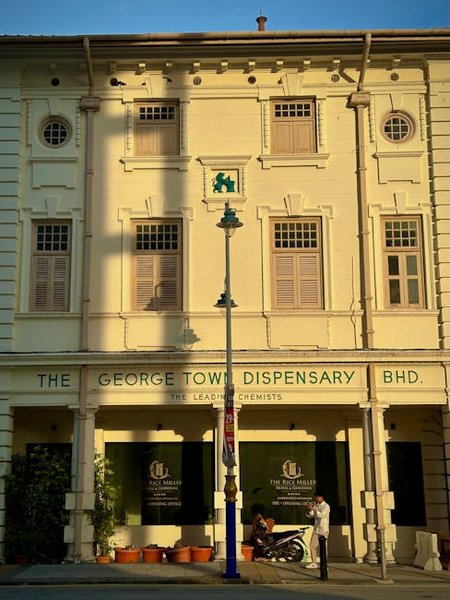
The mechanism is deceptively simple: life happens on the street. The shophouse, the city’s fundamental architectural unit, is designed for it. The “five-foot way,” a covered sidewalk mandated by British law, functions as an extension of the home and business. It’s where the coffee-shop uncle sets out his extra tables, where the tailor does his sewing in the natural light, where neighbours stop to gossip. This blurring of public and private space creates an inherent sociability. You’re not just walking past buildings; you’re passing through the active margins of people’s lives.
The 2012 introduction of the now-iconic street art by Lithuanian artist Ernest Zacharevic was a catalyst, but it plugged into an existing circuit. The art didn’t create the pedestrian culture; it gave it a new focal point. The interactive murals—the “Kids on Bicycle,” the “Boy on Motorcycle”—work because they invite you into the scene, often using real objects (a motorbike, a window shutter) as props. They became a viral phenomenon, but the city’s real resilience is shown in what happened next. Alongside the Instagram hotspots, a grassroots arts scene blossomed. Local artists created their own works, metal rod sculptures (“Marking George Town”) that tell historical anecdotes were installed, and family-run businesses started seeing their own heritage as a story worth telling.
The Real-World Application: A Café, A Hotel, A Lesson
Let me give you a concrete example from a friend, Mei Ling. Her family owned a dilapidated shophouse on Cannon Street, unused for years. When the heritage buzz began, they faced a choice: sell to a developer who might gut it, or try something themselves. They chose restoration, guided by strict UNESCO guidelines—original louvred windows, repaired plasterwork, a painstakingly restored air-well.
They didn’t turn it into a sterile gallery. The ground floor became a minimalist café specializing in single-origin local coffee. The air-well, now filled with light and ferns, is the centrepiece. The first floor houses a tiny boutique hotel, just three rooms, each furnished with a mix of antique family heirlooms and modern comforts. The third floor? That’s the family archive and a quiet reading nook for guests. Mei Ling’s project works because it’s authentic. The business sustains the building, which in turn tells a story. The tourists get an experience, not just a bed. The community retains a piece of its fabric, and a young family stays rooted. This micro-model is being replicated, with varying success, across the city. It’s the application of heritage economics at the human scale.
The Double-Edged Sword: Advantages and Inevitable Tensions
The advantages of George Town’s model are palpable. It has economic vitality. Tourism booms, but it’s diversified—foodies, culture vultures, architecture buffs, digital nomads. It has cultural continuity. Traditions like the annual Hungry Ghost Festival or Thaipusam procession aren’t shows for tourists; they’re massive, authentic community events that the city accommodates and visitors are privileged to witness. There’s an immense sense of place. You cannot confuse George Town with anywhere else on earth.
But the disadvantages are the flip side of the same coin. Gentrification is a constant threat. As property values rise, the very families and artisans who give the place its character can be priced out. That kopitiam (coffee shop) selling a RM1.50 coffee can’t compete with the rent a chic café can pay. Tourist saturation in core areas can feel oppressive, turning living streets into open-air museums. The noise, the trash, the disrespectful behaviour around sacred sites—it’s a real strain. There’s also bureaucratic friction. The UNESCO guidelines, while essential, can be slow and costly to navigate, frustrating owners who just want to fix a leaky roof.
A Personal Misstep and a Lasting Memory
I learned about these tensions firsthand. On an early visit, I, like many, became obsessed with “collecting” the street art. I had a map, a checklist, and a singular mission. I rushed from one mural to the next, elbowing past others for the perfect shot, oblivious to the elderly woman trying to sweep her doorway behind me or the shopkeeper I was blocking. I was treating the city as a theme park.
My perspective shifted one sweltering afternoon. Frustrated by crowds at the “Little Children on a Bicycle” mural, I ducked into a nearby non-descript clan association temple to escape the heat. Inside, it was quiet and cool. An old caretaker, seeing my overheated state, wordlessly offered me a cup of weak Chinese tea. We sat in silence, listening to the fan whirr. He then pointed to a faded photograph on the wall—a group of serious-looking men in the 1920s. “My grandfather,” he said. “They built this port.” In that moment, the cartoon murals outside felt trivial. The real story, the hard, human story of migration, struggle, and community, was in this quiet, unmarked room. I’d been looking for the headline and almost missed the book. Now, I always advise people: put the map away for at least half a day. Get lost. Peek into courtyards. Accept a cup of tea. The curated George Town is charming; the accidental George Town is profound.
Not the Only Player: How It Stacks Up
George Town is often compared to other heritage cities in the region. Melaka, its UNESCO sister, feels more museum-like to me—its historic core is more preserved but can feel less spontaneously alive. Singapore’s conservation areas, like Joo Chiat or Emerald Hill, are impeccably restored but can feel sanitized, more like beautiful stage sets. Hoi An in Vietnam shares the shophouse aesthetic and tourist appeal but has a different, more uniform historical narrative.
George Town’s edge is its glorious, unkempt multiplicity. It’s not a single story. It’s a British fort, a Chinese temple, a Indian mosque, a Peranakan mansion, all jostling for space, all still in use. It’s not frozen in one era; you see 18th-century walls adorned with 21st-century street art. That ongoing dialogue between its layers is what makes it uniquely vibrant and uniquely challenging to manage.
Pitfalls to Sidestep: For Visitors and Would-Be Residents
If you’re visiting, or dreaming of opening a business here, learn from my and others’ stumbles.
- Don’t just chase the art. Use it as a starting point, not an itinerary. The real magic is in the lanes between the murals.
- Respect the residential reality. Remember, people live here. Keep your voice down in residential lanes, don’t peer intrusively into homes, and dress modestly when near places of worship.
- Eat like a local. Skip the sterile, air-conditioned places on the main drag. The best food is in the decades-old kopitiams and hawker centres like Kimberley Street or Air Itam. Be adventurous.
- For entrepreneurs: Authenticity is your currency. Don’t create a generic “heritage-style” café. What’s your story? How does it connect to this place? Engage with the community, don’t just parachute in. Understand the regulations—heritage restoration is a labour of love, not a quick flip.
The Road Ahead: Between the Past and the Future
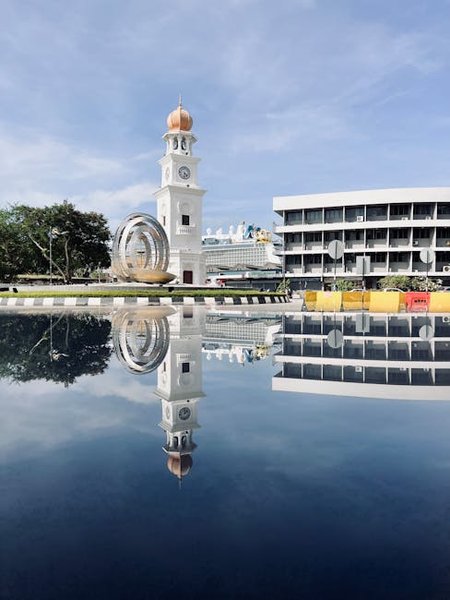
The future of George Town hangs in a perpetual, necessary balance. The pressure from mass tourism and development is immense. There’s talk of cruise ship terminals that could flood the fragile streets, and high-rises loom on the periphery, casting literal and metaphorical shadows.
Yet, there’s cause for hope. A new generation of Penangites—architects, artists, chefs, tech workers—are choosing to return. They’re leveraging the heritage not as a shackle, but as a platform. They’re opening design studios in old warehouses, creating modern Nyonya cuisine, using digital tools to archive oral histories. The conversation is slowly shifting from pure preservation to adaptive regeneration—how to keep the city livable, affordable, and dynamic for its residents first.
Walking through George Town now, I see that tension everywhere. A glossy boutique next to a rattan workshop. A co-working space in a restored godown. It’s messy and imperfect. But that’s the point. George Town isn’t a finished product, a diorama of the past. It’s a workshop. It’s a argument. It’s a city that is constantly reminding us that culture isn’t something you visit behind a velvet rope; it’s something you make, you negotiate, and you live, every single day, on a five-foot-wide sidewalk under the blazing sun. And that, I’ve come to understand, is its greatest masterpiece.