The Stone Forest and the Whispering Caves: A Journey into the Heart of Mulu
I remember the exact moment Mulu got under my skin. It wasn’t during the famous bat exodus, or even standing in the echoing vastness of the Sarawak Chamber. It was a quiet, sodden afternoon on the Headhunter’s Trail, a historical path used by the Kayan people. My boots were caked in thick, orange clay, leeches were a constant, low-grade preoccupation, and a warm, steady rain filtered through the 130-million-year-old canopy. I stopped to catch my breath, leaning against a colossal dipterocarp tree, and in that silence—a silence so profound it had a texture—I heard it. The forest wasn’t silent at all. It was a symphony of dripping water, distant bird calls, and the rustle of unseen life. It felt ancient, indifferent, and utterly alive. That’s Gunung Mulu National Park. It doesn’t just show you its wonders; it lets you feel the weight of its deep time.
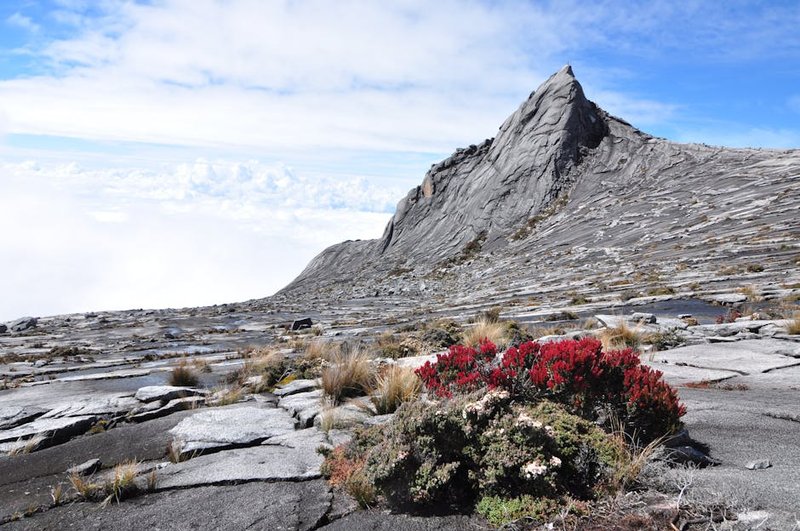
Nestled in the Malaysian state of Sarawak on the island of Borneo, Mulu is a UNESCO World Heritage Site that often gets reduced to a list of superlatives: the world’s largest cave chamber by volume (Sarawak Chamber), one of the world’s longest cave systems (Clearwater Cave), and the iconic Pinnacles—a forest of razor-sharp limestone spikes. But to see it only through that lens is to miss its essence. Mulu is a complex, living laboratory where geology, hydrology, and biology perform a slow, magnificent dance. My own involvement began not as a tourist, but as part of a small research team studying karst hydrology, trying to trace the secret waterways that flow beneath these mountains. That work gave me a perspective on Mulu that goes far beyond the well-trodden boardwalks.
A Bedrock of Deep Time: How Mulu Was Forged
To understand Mulu, you have to start with its bones. This isn’t a landscape built on granite or volcanic basalt; it’s built on limestone, a sedimentary rock formed from the compressed skeletons of ancient marine life. Over 60 million years ago, this area was a shallow, warm sea. Countless organisms died, their calcium carbonate shells settling into thick beds on the seafloor. Tectonic forces later lifted these beds, exposing them to the most patient sculptor of all: slightly acidic rainwater.
This is the engine of all karst landscapes. Rainwater, absorbing carbon dioxide from the atmosphere and soil, becomes a weak carbonic acid. It seeps into cracks in the limestone and begins to dissolve it, molecule by molecule. Over millennia, this process creates the two defining features of Mulu: its caves and its surface formations. The water finds underground routes, enlarging fissures into tunnels, chambers, and vast subterranean rivers. On the surface, the same process, guided by fractures in the rock, creates the otherworldly Pinnacles and the jagged, forest-clad peaks of the stone forest.

The historical context is equally fascinating. While officially “discovered” by Western explorers like Spenser St. John in the 19th century, Mulu has been known to the indigenous Penan and Berawan peoples for generations. They knew the caves as spiritual places and practical shelters. The “Headhunter’s Trail” I walked is a testament to this human history—a route used for trade and, as the name grimly suggests, for warfare. Modern exploration kicked into high gear in the 1970s with the Royal Geographical Society expeditions, which began to systematically map the staggering scale of the cave systems. Their work laid the foundation for the park’s establishment in 1974 and its UNESCO designation in 2000.
The Living, Breathing System: More Than Just Holes in the Ground
Calling Mulu a collection of caves is like calling a rainforest a collection of trees. It’s a fully integrated ecosystem where the surface and subsurface are inextricably linked. The caves are not dead ends; they are the lungs and circulatory system of the mountain.
Take the bat colonies, for instance. Every evening at Deer Cave, up to three million wrinkle-lipped bats spiral out into the twilight to forage across the forest. This isn’t just a spectacle; it’s a critical nutrient transfer. Those bats consume tons of insects nightly, and their guano, deposited deep within the cave, forms the base of a unique cave-bound ecosystem. Specialized insects, spiders, and even cave-adapted crabs thrive on this resource. The guano is also harvested (sustainably and under strict control) by local communities for fertilizer, a direct real-world application of the cave ecology.
The hydrological connection is even more fundamental. The Melinau River, which cuts through the park, is fed by these underground systems. Sinking streams disappear into ponors (swallow holes) on the mountain slopes, travel through darkness, and re-emerge at mighty springs. Our research involved tracing these connections using fluorescent dyes. Watching a non-toxic dye poured into a stream on a mountainside reappear days later and miles away at the Clearwater spring was a powerful lesson in connectivity. It means that what happens on the surface—pollution, deforestation—can directly poison these pristine underground rivers and the life they support.
The Double-Edged Sword of Discovery: Tourism in a Fragile World
Mulu’s application in the modern world is, overwhelmingly, ecotourism. And it’s a masterclass in how to do it right, and a warning about its constant pressures. The park authorities, alongside experienced tour operators, have created an access model that is remarkably effective. You can’t just wander off into the caves. Visits are guided, on defined routes, with strict limits.
The infrastructure is cleverly low-impact. Boardwalks protect the fragile forest floor from thousands of trampling feet. In Show Cave sections like Deer and Lang’s Cave, discreet lighting illuminates formations without promoting algae growth (a common pitfall in poorly managed caves). The more adventurous caving trips, like the adventure sarawak chamber package or the challenging ascent to the Pinnacles, require a high level of fitness and are led by specialized guides. This gates the experience, preserving the wilderness feel for those willing to earn it.
But the advantages come with inherent disadvantages. The very act of bringing people in creates risk. A classic mistake I’ve seen, even with the best systems, is the temptation to touch. A shiny stalactite, formed over centuries, can be permanently stained and its growth halted by the oils from a single human hand. Guides are vigilant, but the urge is understandable. The bigger challenge is the carbon footprint of getting there. Most visitors fly into Mulu’s small airport, and while the park itself is a model of sustainability, the journey to it is not.
Compared to more commercialized cave systems—think the neon-lit caves of some other countries—Mulu feels authentic and wild. The alternatives in Borneo, like the Gomantong Caves in Sabah, offer a similar spectacle of bats and swiftlets but are often more focused on edible bird’s nest harvesting and can feel less pristine. Mulu’s strength is its holistic presentation: the caves are part of a grander natural narrative.
Lessons from the Mud and the Dark: A Personal Logbook
My most enduring lessons from Mulu didn’t come from a textbook. They came from getting things wrong. Early in my fieldwork, I learned the hard way about the park’s relentless humidity. I left a notebook in a supposedly “dry” bag overnight. By morning, it was a pulpy, mold-spotted mess. Best practice number one: everything that needs to stay dry goes in a waterproof case with silica gel desiccants. Everything.
Another time, on a mapping expedition in a newer cave section, we became overly focused on a side passage and neglected to place enough marker tape at our junction. The return journey was a heart-pounding twenty minutes of uncertainty in total blackness before we found our main line. It was a rookie error that drilled in the cardinal rule of caving: your survey markers are your lifeline. Be obsessive about them.
The most profound case study, however, is Mulu’s own response to change. In recent years, guides and researchers have noted shifts in the timing of the bat exodus. It seems to be occurring later, possibly linked to broader climatic changes affecting insect prey availability. The park has become an unwitting sentinel for climate change. Long-term monitoring projects, some dating back to those first Royal Geographical Society expeditions, are now providing invaluable baseline data to track these subtle, alarming shifts.
Looking Ahead: The Future of a Living Archive
The future of Gunung Mulu National Park hinges on a delicate balance. The demand to experience such places will only grow. The pressure to build more lodges, extend runway, or create easier access will be constant. The park’s management must hold the line, maintaining the “carrying capacity” model that has served it so well.
The real opportunity lies in deepening its role as a research hub. With advancements in technology like environmental DNA (eDNA) sampling, scientists can now assess biodiversity from a few liters of cave water, reducing the need for intrusive collection. LiDAR scanning can map caves and the forest canopy in unprecedented detail, revealing new connections. Mulu is perfectly positioned to be a testing ground for these non-invasive conservation technologies.
Furthermore, the integration of indigenous knowledge must move beyond tokenism. The Penan and Berawan guides I’ve worked with possess an encyclopedic, generational understanding of forest signs, animal behavior, and medicinal plants. Formalizing this as part of the park’s scientific and interpretive program would enrich the visitor experience and empower local communities.
Standing again at the mouth of Deer Cave, watching the last bats vanish into the forest, I’m always struck by the same thought. Mulu is not a museum. It’s not a static exhibit of cool rocks. It’s a dynamic, breathing entity. The water is still dissolving rock, the stalactites are still growing at a glacial pace, the bats are adapting their routines, and new cave passages are undoubtedly forming in the dark.
Our job isn’t to simply preserve it like a fly in amber. It’s to protect the processes that make it alive. To ensure that the symphony of dripping water, the rush of hidden rivers, and the whisper of millions of wings continue to tell their ancient story, long after our own footprints on the boardwalks have faded. That is the true challenge and the enduring magic of this stone forest.