The Jonker Walk: More Than Just a Street, It’s Melaka’s Beating Heart
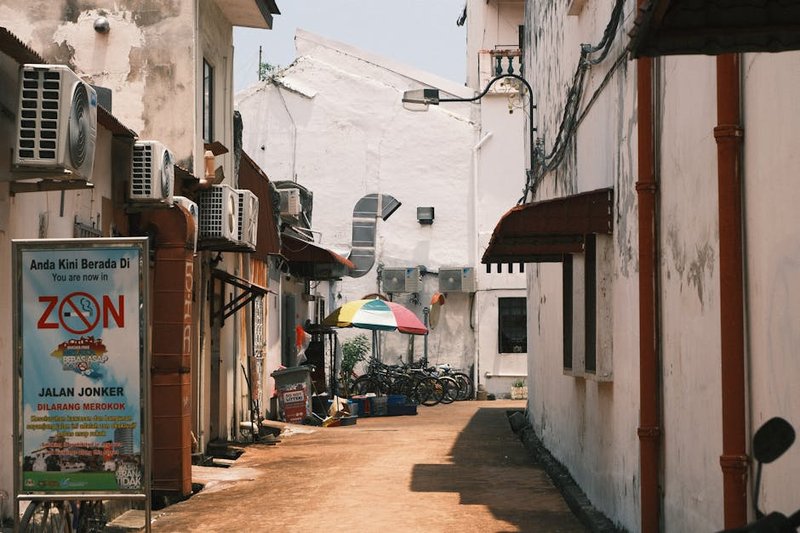
I’ll be honest, my first encounter with Jonker Walk was a bit of a shock. I’d arrived in Melaka, Malaysia, on a sweltering Tuesday afternoon, lured by postcard images of serene canals and historic red buildings. After dropping my bag, I wandered towards what my map said was the famous Jonker Street. What I found was a quiet, narrow lane of shuttered shopfronts, the air thick with humidity and the faint scent of old wood. It felt charming, but sleepy. A relic. I remember thinking, “Is this it?”
Then, Friday evening came.
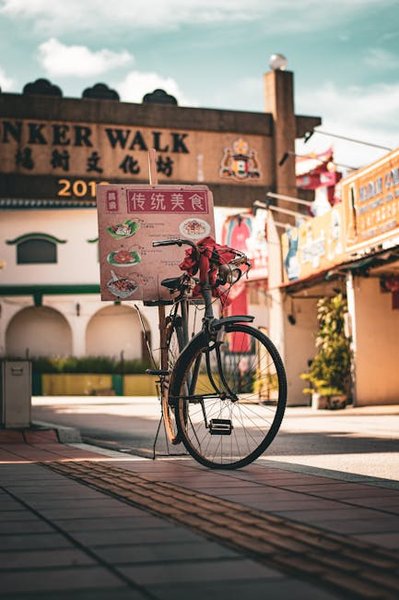 The quiet weekday Jonker Street transforms into the vibrant, pulsing Jonker Walk night market.
It was as if someone had flipped a switch. The metal shutters rattled up, folding tables and colourful canopies mushroomed along the street, and the air filled with the sizzle of satay, the rhythmic clang of a kroncong band, and the excited chatter of thousands of people. That quiet lane had vanished, replaced by a river of humanity, a carnival of smells and sounds. That’s when I understood: Jonker Street is a place, but Jonker Walk is an experience, a weekly phenomenon that has become the undeniable soul of modern Melaka. It’s a masterclass in cultural preservation meeting chaotic, joyful commerce, and over many subsequent visits—some planned, some accidental—I’ve come to see it as one of Southeast Asia’s most fascinating and complex public spaces.
From Merchant Shophouses to Tourist Mecca: A Layered History
To really get Jonker Walk, you have to peel back its layers. The street itself, Jalan Hang Jebat (its official name, though no one calls it that), sits at the heart of Melaka’s old Chinatown. For centuries, these shophouses—with their distinctive narrow fronts, deep interiors, and air-wells—were the domain of Baba Nyonya (Straits Chinese) families and wealthy merchants. The ground floors were for business; the ornate, often beautifully tiled upper floors were for living. You can still feel that history in the carved wooden doors, the pastel-coloured façades, and the occasional glimpse of a hidden courtyard.
The transformation into the Jonker Walk night market is a relatively recent chapter, born in the late 1990s as a strategy to revitalise the area. The local authorities, alongside the street’s traders, made a simple but brilliant decision: close the street to traffic on weekend evenings and let the community spill out. It wasn’t conceived as a sterile tourist attraction, but as a space for locals to gather, sell, and celebrate. This organic origin is key. Unlike a purpose-built night market, Jonker Walk has the authentic texture of a living neighbourhood simply opening its doors. The fortune teller setting up his stool might be sitting in front of his own ancestral home. The woman frying kueh (local cakes) might be using her grandmother’s recipe and her own kitchen out back.
How Jonker Walk “Works”: The Anatomy of a Weekend Transformation
Technically, the “how” is straightforward: roadblocks go up at 6:00 PM on Fridays, Saturdays, and Sundays. But the magic is in the unwritten rules and the intricate ecosystem that emerges.
The Spine: The street itself is the main artery. Stalls line both sides, creating a narrow, bustling corridor. The goods follow a rough, unspoken zoning. Near the main entrance, you’ll find the “tourist trinkets”—keychains, t-shirts, magnets. But push further in, and the offerings shift. You hit a stretch dedicated to food: giant prawns on skewers, durian puffs, icy cendol, and my personal kryptonite, the pineapple tarts from that one stall with the perpetual queue. Then comes a section for handmade crafts—intricate beaded shoes, local pottery, calligraphy—and another for live performances, where amateur singers belt out ballads for a cheering crowd.
The Capillaries: The real secrets, however, are in the perpendicular alleyways and the shophouses themselves. While the walk is a linear experience, the side lanes offer respite and discovery. Lorong Hang Jebat, for instance, often has smaller, more artistic vendors or impromptu musical acts. And you must duck into the shophouses. One might be a meticulously preserved Baba Nyonya Heritage Museum, frozen in time. The next could be a hipster café serving artisan coffee in a courtyard draped in fairy lights. This duality—the chaotic street market versus the calm, curated interior—is the genius of the layout.
The Operators: The stallholders are a mix of multi-generational families and young entrepreneurs. There’s an art to their setup. The most successful don’t just sell; they perform. The muah chee (sticky rice dough) seller rhythmically scissors his creation into peanut and sesame powder with a theatrical flair. The “ice cream uncle” with his old-school bicycle cart isn’t just selling a cone; he’s selling nostalgia, and he knows exactly how to pose for a photo.
Lessons from the Crowd: What Jonker Walk Teaches Us
Spending time here, you start to see it as a case study in more than just tourism.
On Cultural Commerce: Jonker Walk walks a tightrope between authenticity and commercialisation. Yes, there’s a lot of “I ♥ Melaka” merchandise. But nestled within are artisans keeping traditional crafts alive. I once watched an elderly man hand-carving intricate names in Chinese characters on a sliver of bamboo. He wasn’t just making a souvenir; he was providing a tangible, personal connection to a language and art form. The market creates an economic incentive for these skills to survive.
On Urban Space: It’s a powerful example of tactical urbanism—temporarily reclaiming a street for people. For those few evenings, the car is dethroned. The space belongs to pedestrians, to chatter, to chance encounters. It shows how flexible a city street can be, transforming from a transit route to a community living room.
On Pacing and Perception: My initial Tuesday disappointment was a vital lesson. Jonker Walk isn’t a 24/7 spectacle. Its power is in its temporality. The build-up through the week, the explosive release on the weekend, and the quiet reset on Monday. This rhythm creates anticipation and prevents the “museumification” of the area. The street still lives a dual life.
The Delicate Balance: Advantages, Pitfalls, and the Scent of Durian
No place is perfect, and Jonker Walk’s strengths are intimately tied to its challenges.
The Advantages are visceral. It’s an incredible, accessible economic engine for hundreds of small businesses. It’s a democratised cultural experience—free to enter, with something for every budget. It fosters a incredible sense of community and shared energy. And practically, it concentrates the tourist bustle into specific times, theoretically preserving the area’s daytime tranquility.
The Disadvantages and Pitfalls become clear on a packed Saturday night. Overtourism is the elephant in the room. The human traffic can become a crushing, slow-moving river, especially post-pandemic as travel surged back. This leads to my biggest piece of advice: go early, or go late. Arrive right at 6 PM as stalls are still setting up, or come after 10 PM when the day-tripper crowds thin. The middle hours, from 8-9:30 PM, can be a claustrophobic test of patience.
Another common mistake is sticking only to the main drag. The most memorable meals I’ve had were in the half-empty coffee shops on the parallel streets, watching the market’s fringe. And for heaven’s sake, don’t stop abruptly in the middle of the flow to take a picture! The social etiquette is to keep moving, or step to the side.
Then there’s the homogenisation risk. As rent rises, there’s pressure for stalls to sell only the highest-margin, fastest-selling items. The unique, quirky vendors can get squeezed out. I’ve noticed fewer traditional craft stalls and more selling phone accessories or mass-produced toys over the years. Maintaining that curated chaos is a constant battle.
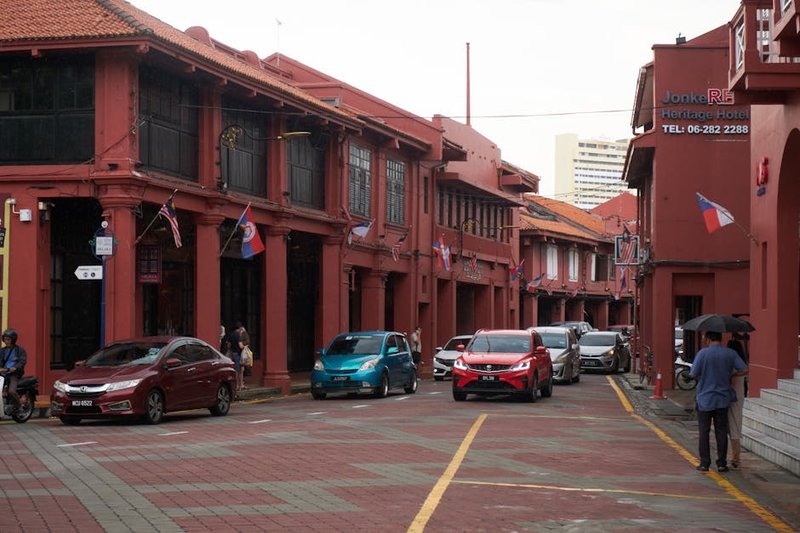 The future of Jonker Walk lies in balancing its iconic night market with a vibrant, diverse daytime community of cafes and boutiques.
A Personal Coda: The Taste of Memory
I’ll leave you with a small, personal moment. On my last visit, I finally tried the famous chicken rice balls from a decades-old shop just off Jonker Walk. It wasn’t from a market stall, but from a proper restaurant that had fed generations. Sitting there, the cacophony of the market just a muffled hum through the walls, I realised this was the full picture. The Jonker Walk frenzy is the dazzling fireworks display. But the true heart of Melaka—the history, the family recipes, the slow-paced life—exists in the quiet spaces in between and before the show. The magic of Jonker Walk is that it draws you in with its spectacle, but if you’re willing to look deeper, it also guides you to those quieter, richer truths. It’s not just a walk; it’s an invitation to understand a city’s layered soul, one satay stick and one hidden courtyard at a time.