The Temple on the Hill: Finding Peace and Pandemonium at Penang’s Kek Lok Si
I have a confession to make: my first visit to Kek Lok Si Temple was an accident. It was my third day in Penang, and I was hopelessly lost, having taken a wrong turn on a rented scooter while searching for a famous laksa stall in Air Itam. As I rounded a bend, the road began to climb steeply, and the urban clutter of George Town fell away. Then I saw it—a sprawling, impossible complex of pagodas, pavilions, and golden statues cascading down the hillside like a celestial city that had crash-landed into the jungle. I forgot all about the laksa. I parked the scooter, my map now irrelevant, and let myself be drawn upward. That was a decade ago, and I’ve returned almost every year since, not as a lost tourist, but as someone seeking a masterclass in harmony, history, and human ambition.
Kek Lok Si isn’t just a temple you visit; it’s an experience you navigate, a living organism of faith, culture, and commerce. To understand it is to walk its paths, feel its contrasts, and listen to its many layers of sound—from the solemn chanting in the main halls to the cheerful clatter of souvenir stalls and the distant hum of Penang below.
A Dream Built on a Mountainside: The History of Kek Lok Si
The story of Kek Lok Si begins not with a king’s decree, but with the vision of a single monk. Venerable Beow Lean, the abbot of the Goddess of Mercy Temple in Pitt Street, George Town, wanted to establish a retreat for Buddhist monks and a sanctuary for the Dharma. In 1890, he chose this hillside in Air Itam, a site already considered auspicious. The name he gave it, “Kek Lok Si” (極樂寺), translates to “Temple of Supreme Bliss” or “Paradise Temple,” setting a profoundly optimistic tone for what was to come.
Construction began in 1893 and continued, in phases, for decades. This piecemeal growth is key to understanding the temple’s unique character. Unlike the Forbidden City or Angkor Wat, built in a single, cohesive style under one ruler, Kek Lok Si evolved. It absorbed the influences, donations, and artistic sensibilities of the successive Chinese communities that called Penang home—primarily the Hokkien and Cantonese, but also the Thai and Burmese Buddhists who contributed later.
The most pivotal figure after Beow Lean was arguably Venerable Khoo Seok Wan, a scholar and the temple’s second abbot. He spearheaded the construction of the iconic Pagoda of Ten Thousand Buddhas, which perfectly encapsulates the temple’s syncretic soul. The pagoda’s design is a physical manifestation of cultural fusion: its base is Chinese in style, its middle tier is Thai, and its crown is distinctly Burmese. It’s not just an architectural marvel; it’s a statement. It says that the path to enlightenment isn’t confined to one tradition or one aesthetic.
How Kek Lok Si “Works”: An Anatomy of Pilgrimage and Place
Technically speaking, Kek Lok Si is a Mahayana Buddhist temple with strong influences from Taoist and Chinese folk traditions. But to reduce it to a technical label misses the point. How it works is through a carefully orchestrated, though often chaotic-feeling, journey of ascent.
Your visit typically follows a vertical narrative. You enter through the ornate archway at the base, immediately immersed in a bazaar of stalls selling everything from incense and prayer beads to “I ♥ Penang” t-shirts and refrigerator magnets. This is the first test, the worldly distraction you must move through. From there, a series of courtyards and halls lead you upward. The Hall of the Four Heavenly Kings guards the entrance to the main complex, a classic feature in Chinese Buddhist temples.
The heart of the lower complex is the Pond of Liberation, teeming with turtles. For a small donation, you can purchase a turtle (or a basket of smaller ones) to release into the pond—a symbolic act of earning merit through compassion and giving life. It’s a powerful, tangible ritual, especially for families with children.
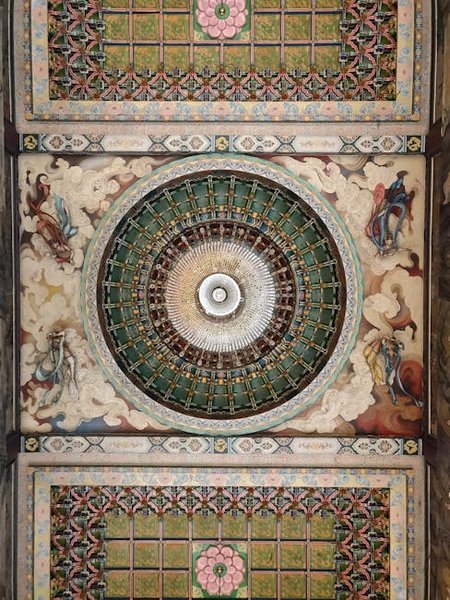
Then comes the ascent. You can take a steep walk or the inclined lift to the upper levels, which are dominated by the colossal 36.5-meter-tall bronze statue of Kuan Yin, the Goddess of Mercy. This addition, completed in 2002, transformed the temple’s skyline. She stands under a magnificent, open-air pavilion with 16 bronze columns, facing the sea. The scale is breathtaking, designed to inspire awe. Surrounding her are 10,000 smaller alabaster statues of Kuan Yin in various forms, each housed in its own niche—a forest of compassion.
The “work” of the temple happens in the interplay between these spaces: the commercial buzz at the bottom, the communal rituals in the middle, and the silent, overwhelming contemplation at the top. It mirrors the Buddhist path itself—moving from the distractions of samsara (the cycle of rebirth) toward liberation and enlightenment.
More Than a Postcard: Kek Lok Si in the Real World
The applications of Kek Lok Si extend far beyond its religious function. It’s a social hub, an economic engine, and a cultural anchor.
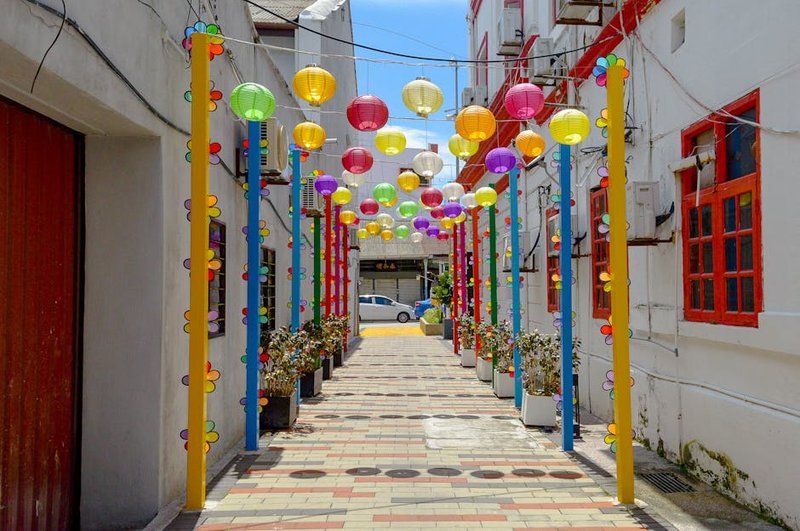
- A Living Calendar: The temple’s rhythm dictates life in Air Itam. During Chinese New Year, it undergoes a metamorphosis. For weeks, the complex is draped in thousands of red lanterns. The effect is magical; the entire hillside glows with a warm, festive light. The temple becomes the focal point for Penang’s Lunar New celebrations, drawing hundreds of thousands of visitors. It’s a case study in how a religious site can amplify and host a cultural festival, creating an economic boom for stall vendors, taxi drivers, and local eateries (that laksa stall I originally sought does a roaring trade during this period!).
- Community and Continuity: It serves as a community center for the local Chinese Buddhist population. Dharma talks, meditation sessions, and scripture classes are held regularly. I’ve attended a midday chanting session in one of the quieter side halls, where the rhythmic sutras, the smell of sandalwood incense, and the focused energy of the devotees created a pocket of profound peace, utterly separate from the tourist throngs outside.
- A Bridge for Understanding: For non-Buddhist visitors, it functions as an accessible introduction to Chinese Buddhist and syncretic traditions. The iconography—from the laughing Maitreya Buddha at the entrance to the fierce Dharma Protectors—tells stories. With a good guide or even a thoughtfully read placard, the temple becomes a vibrant textbook on philosophy and mythology.
The Light and Shadow: Advantages and Inevitable Trade-offs
The temple’s greatest strength is also the source of its challenges.
Advantages:
- Architectural and Spiritual Grandeur: It is undeniably spectacular. The sheer ambition of its design, blending styles and scaling a hill, creates a sense of wonder that few religious sites can match.
- Cultural Synthesis: It stands as a beautiful, physical testament to the successful blending of Southeast Asian Buddhist cultures. It doesn’t just tolerate different traditions; it architecturally celebrates them.
- A Full-Sensory Experience: It engages you completely—the visual feast, the scent of incense and frangipani, the sounds, the tactile experience of turning prayer wheels or feeling the cool marble underfoot.
Disadvantages & Tensions:
- Commercialization: The intense marketplace atmosphere at the entrance can feel jarring, even disrespectful to some. It’s a constant balancing act between funding the temple’s maintenance (which must be enormous) and preserving its sanctity.
- Crowds and Congestion: During peak times, it can be overwhelmingly crowded. The narrow pathways become choked, and the serene atmosphere can evaporate. Finding a moment of quiet reflection requires strategic timing.
- A Certain Thematic Disunity: The purist might argue that the addition of the giant Kuan Yin statue, while impressive, has a slightly “theme-park” scale that clashes with the more intricate, traditional craftsmanship of the older halls. The evolution continues, but not always seamlessly.
Lessons from the Lotus Pond: Personal Experiences and Pitfalls to Avoid
On one visit, I made the classic rookie mistake: I went on a Sunday afternoon during the school holidays. The queue for the lift to the Kuan Yin statue was over an hour long, the pathways were a slow-moving river of people, and the heat was stifling. I left feeling drained and irritable, having seen little but the backs of strangers. I learned my lesson.
Best Practices I’ve Adopted:
- Timing is Everything: Go early. Arrive right when the gates open at 8:30 AM. You’ll have the courtyards largely to yourself for a precious hour. Alternatively, go later in the afternoon, around 4 PM, and stay until closing. The late light on the golden roofs is sublime, and the crowds thin considerably.
- Embrace the Side Paths: Don’t just march up the main thoroughfare. Explore the smaller, winding paths that lead to lesser-known shrines and gardens. Behind the main halls, I once found a quiet grotto dedicated to a local earth deity, attended by a single, elderly caretaker who offered me a sweet tea.
- Engage with Intent: Decide what you want from the visit. Is it photography? Go for the light. Is it cultural understanding? Consider hiring one of the licensed guides at the entrance. Is it personal reflection? Find a bench near the Pagoda and just sit, observing the comings and goings.
- The Lift is a Tool, Not a Necessity: The inclined lift saves time, but the walk up—while strenuous—takes you past beautiful details you’d otherwise miss: intricate murals, hidden altars, and stunning framed views of the valley below.
A Comparison to Alternatives: How does it stack up against, say, Wat Chayamangkalaram (the Thai Buddhist Temple with the Reclining Buddha) in George Town? That temple offers a focused, serene, and deeply Thai experience in a compact space. Kek Lok Si is the opposite: it’s expansive, syncretic, and bustling. They complement each other perfectly. One is a contemplative sigh; the other is an exuberant, sprawling story.
The Future of Supreme Bliss
Kek Lok Si is not a relic; it’s a living entity that continues to grow. The maintenance challenges on a hillside in a tropical climate are perpetual. The tension between preservation and progress, sanctity and sustainability, will always be there.
I believe its future lies in managed evolution. There’s talk of better crowd-flow systems, perhaps timed ticketing for peak periods, and enhanced educational programs. The temple committee has a monumental task: to care for a historic site that is also a active place of worship and a top-tier tourist attraction. The key will be to make decisions that honor Venerable Beow Lean’s original vision of a sanctuary, even as hundreds of thousands seek it out.
On my most recent visit, I sat on the upper terrace as the evening call to prayer from a distant mosque in the valley mingled with the temple’s bell. Below, the lanterns began to twinkle on, stringing the hillside with points of light. The day-trippers had left, and a calm settled over the marble courtyards. In that moment, the temple’s true nature revealed itself. It’s not a museum piece frozen in time. It’s a resilient, adaptive, and profoundly human creation. It holds space for commerce and quiet, for the tourist’s gasp and the devotee’s whispered prayer. It is, in its wonderfully imperfect way, a working model of paradise—not as a distant, perfect heaven, but as a hilltop here on earth where the messy, beautiful noise of humanity strives, with great hope, toward a moment of bliss. And I’m already planning my next wrong turn that will lead me back there.