The Sky’s the Limit: My Unforgettable Journey on Langkawi’s SkyCab
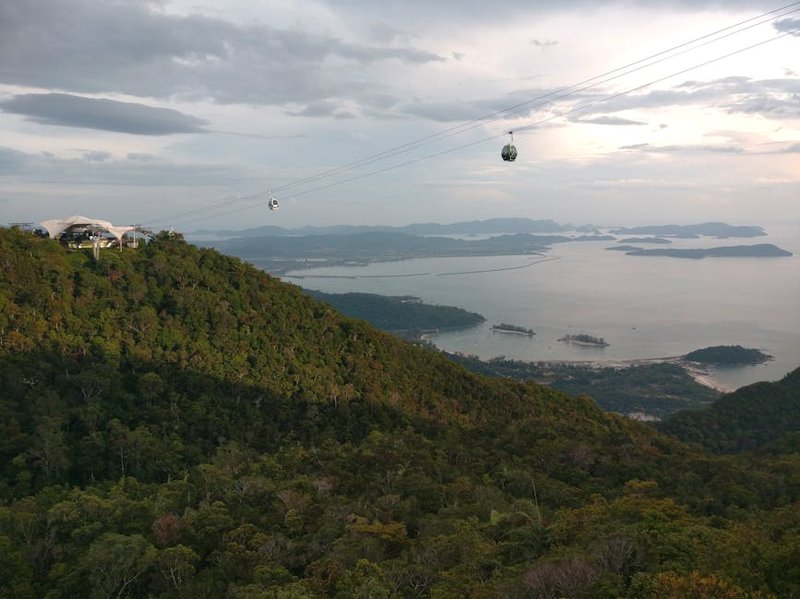
I’ll admit, I’m a bit of a cable car connoisseur. From the dizzying heights of the Alps to the urban ascents over city skylines, I’ve ridden my fair share. But nothing, and I mean nothing, quite prepared me for the sheer, jaw-dropping spectacle of the Langkawi Cable Car, or as it’s officially known, the Langkawi SkyCab. My first encounter wasn’t from a brochure; it was from the deck of a ferry chugging into Kuah Jetty. There, in the distance, a thin, almost impossibly steep line of cable soared from the dense jungle of Machinchang mountain to its jagged peak. It looked less like a tourist attraction and more like a feat of engineering audacity. I knew right then I had to experience it for myself.
That initial glimpse sparked a fascination that’s led me back to Langkawi three times, each trip teaching me something new about this remarkable piece of infrastructure. It’s more than just a ride; it’s a portal to a prehistoric world, a masterclass in panoramic appreciation, and sometimes, a lesson in patience and planning. Let me take you through what I’ve learned.
/images/Langkawi_Cable_Car_(SkyCab)_overview.jpg)
From Vision to Vertical Reality: The Story of the SkyCab
To understand the SkyCab, you need to understand its setting. The Machinchang Cambrian Geoforest Park isn’t just any hill. These are some of the oldest rock formations in Southeast Asia, dating back over 500 million years. For centuries, their dramatic peaks—like Gunung Mat Cincang—were the exclusive domain of climbers, wildlife, and swirling mists. The idea of a cable car here was born not just from tourism, but from a desire to make this geological wonder accessible.
The project, spearheaded by the Langkawi Development Authority (LADA), was a monumental undertaking. Imagine trying to anchor massive support towers into ancient, weathered sandstone cliffs. The environmental considerations were immense. I once spoke to a retired engineer who worked on the early surveys, and he described the challenge of building a system that was both thrillingly exposed and utterly safe, all while minimizing its footprint on the pristine rainforest. When it opened in 2003, it wasn’t just Malaysia’s first cable car; it was a statement of ambition, instantly becoming the island’s iconic landmark.
Engineering on the Edge: How the SkyCab Conquers the Mountain
This isn’t your gentle, city-center gondola. The SkyCab is a bi-cable ropeway system, which is the technical way of saying it’s serious business. Here’s the simple version: there are two main cables. One is a stationary “track” cable that the cabins roll along, and the other is a moving “haul” cable that pulls them. This design allows for remarkable stability, even in the gusty winds that can whip around the peaks.
The statistics still boggle my mind. The journey covers 2.2 kilometers, but it’s the vertical climb that steals your breath—from about 40 meters above sea level at the base station to over 700 meters at the top. The gradient at one section, famously, is a staggering 42 degrees, one of the steepest in the world. You don’t just feel like you’re going up; you feel like you’re being launched into the sky.
The cabins themselves are a marvel. The standard ones are comfortable, but for a truly unforgettable experience, I always splurge on the “Glass Cabin”—a gondola with a transparent floor. The first time I stepped into one, my knees went a little weak. Watching the dense, green canopy shrink into a broccoli-like carpet beneath your feet, followed by the heart-stopping view of nothing but air and distant rock face, is pure adrenaline. It transforms the ride from observation to immersion.
/images/langkawi_cable_car__skycab__4350b6dd.jpeg)
More Than a Ride: The Real-World Application of a View
So, what’s the “application” of a cable car? For Langkawi, it’s multifaceted. Primarily, it’s the cornerstone of eco-tourism. It provides access without intrusion. You get to witness the majesty of the geoforest without the erosion and disturbance of a road or countless hiking trails. It’s a powerful tool for geotourism, educating visitors about the unique Cambrian landscape through its accompanying SkyBridge and informational plaques.
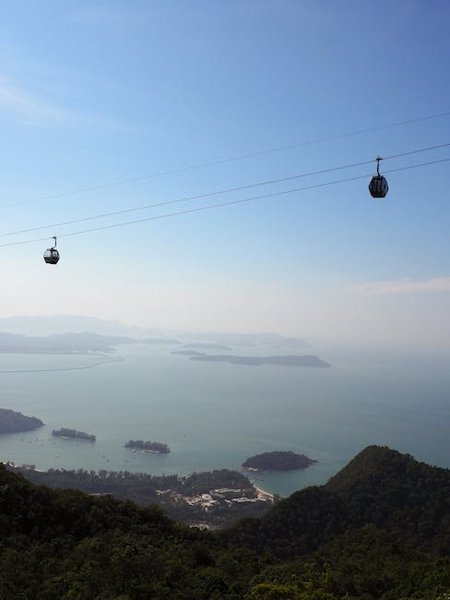
Economically, it’s an engine. The SkyCab complex at the summit, with its shops, restaurants, and the bridge, employs locals and drives ancillary spending. But its most profound application is experiential. It offers a perspective shift—literally. You see Langkawi not as a collection of beaches and hotels, but as a primordial archipelago, with islands like Pulau Tepor scattered like emeralds in the turquoise Andaman Sea. It contextualizes the entire island.
The Highs and the Lows: An Honest Appraisal
Let’s be real, no experience is perfect.
Advantages:
- Unrivaled Views: This is the undisputed king. On a clear day, the vista stretching to southern Thailand is arguably the best in all of Malaysia.
- Unique Access: It delivers you to a breathtaking environment that would otherwise require a strenuous, expert-level climb.
- The SkyBridge: The curved pedestrian bridge at the top, suspended from a single pylon, is an attraction in itself and a brilliant piece of design that complements the cable car journey.
- Efficiency: It moves a lot of people up a big mountain relatively quickly.
Disadvantages:
- The Weather Dictates Everything: This is the biggest caveat. The SkyCab is often closed due to high winds or lightning. I’ve seen queues of disappointed tourists turned away. The mist can also roll in and obliterate the view in minutes, leaving you in a cold, grey cloud.
- Queues: It’s wildly popular. Peak season wait times can exceed two hours. The midday sun at the base station queue can be brutal.
- Cost: It’s one of the more expensive attractions in Malaysia, especially if you opt for the fast lane or glass cabin.
- Not for the Acrophobic: If you have a severe fear of heights, this might be a hard pass. The exposure is very real.
A Tale of Two Visits: Lessons from the Mist and the Sun
My first ascent was a lesson in humility. I’d booked months in advance, dreamed of golden-hour photos, and arrived to a bustling queue. By the time we reached the top, a thick, impenetrable fog had enveloped the summit. The famous view was a wall of white. We couldn’t even see the start of the SkyBridge. It was like being inside a cotton ball. Initially gutted, we decided to wait it out with a hot tea at the summit cafe. Then, magic happened. For just about 90 seconds, the wind tore a hole in the mist. Suddenly, we were looking down at a fairy-tale landscape of peaks piercing a sea of cloud. It was more dramatic and ephemeral than any clear-day view could have been. It taught me that the mountain offers what it will, and sometimes the hidden moments are the most special.
My second visit was meticulously planned. I booked the first time slot of the day (more on that later) and a Glass Cabin. The morning air was crystal clear, the queues non-existent. As we ascended, the low-angle sun painted the ancient rock faces in gold and shadow, highlighting every fissure and crag. We had the SkyBridge almost to ourselves, the morning silence broken only by the call of distant birds. The difference was night and day. It reinforced that with the SkyCab, strategy is everything.
The Alternatives: Hiking vs. the Haul
Is there another way? Technically, yes. The Seven Wells Waterfall (Telaga Tujuh) area offers hiking trails that lead into the Machinchang range. These are beautiful, challenging jungle treks for serious enthusiasts. However, they do not take you to the summit pinnacles where the SkyCab and SkyBridge are. They offer a forest-floor perspective—lush, humid, and teeming with life—but not the eagle’s-eye panorama. They’re complementary experiences, not direct substitutes. For the vast majority of visitors seeking that iconic, top-of-the-world view, the cable car is the only viable option.
Navigating the Pitfalls: Your Guide to a Smooth Ascent
Based on my hard-earned experience, here’s how to avoid common mistakes:
- Never, Ever Assume It’s Open: Always check the official SkyCab website or social media pages on the morning of your visit. Weather closures are frequent and announced there. Don’t just show up.
- Chase the Morning, Avoid the Midday: This is my golden rule. Book the earliest ticket you can get (usually 9:30 AM). You’ll beat the crowds, the heat, and the afternoon clouds/mist that often build over the mountains. The light is also better for photography.
- Buy Tickets Online: Save yourself the huge queue at the ticket counter. Purchase in advance on their website. Seriously, just do it.
- The Fast Lane & Glass Cabin Conundrum: The “Fast Lane” ticket is pricey but can save hours on a busy day. I only recommend it if you’re on a tight schedule. The Glass Cabin is a separate, higher cost. For first-timers, I think it’s worth it for one-way up. The novelty is incredible.
- Dress in Layers: The summit can be 10-15 degrees Celsius cooler and very windy. A light jacket or sweater is essential, even if you’re sweating at the base.
- Manage Your Expectations: You are at the mercy of the mountain. Even with perfect planning, the view can vanish. Embrace the atmosphere, whatever it is.
The Future: What’s Next for the SkyCab?
The system has already seen upgrades over the years. Looking ahead, the focus will likely be on sustainability and visitor management. I’d love to see more integrated digital storytelling in the cabins—perhaps an app-linked audio guide pointing out geological features and islands as you ascend. There’s also a constant need to balance visitor numbers with preservation. The future isn’t about making it bigger, but smarter and more immersive, ensuring it continues to inspire awe without sacrificing the fragile environment it celebrates.
Standing on the SkyBridge, with the world falling away on all sides, you get a profound sense of scale—of deep time in the ancient rock and vast space in the endless sea. The Langkawi SkyCab is more than a transport mechanism; it’s a catalyst for wonder. It has taught me to respect weather, to value preparation, and to always look for the beauty in the unexpected, whether it’s a blinding vista or a mysterious fog. It remains, in my book, the single most compelling reason to visit Langkawi. Just remember your jacket, book that early slot, and let the mountain do the rest. The view, in every sense of the word, is unforgettable.
/images/langkawi_cable_car__skycab__0ac2558f.jpeg)