The Day I Stopped Breathing: A Personal Journey to Langkawi’s Sky Bridge
I have a confession to make: I’m terrified of heights. Not the cute, butterflies-in-your-stomach kind of fear, but the full-body, knees-locked, why-is-the-world-spinning variety. So, when I found myself planning a trip to Langkawi, Malaysia, the Langkawi Sky Bridge wasn’t just another tourist attraction on a checklist. It was a personal gauntlet I felt compelled to run. I’d seen the photos—that impossible-looking curved walkway suspended over a vertiginous drop in the Machinchang mountain range—and a stubborn part of me needed to know what it felt like to stand there. What I discovered wasn’t just a feat of engineering, but a profound lesson in perspective, both literally and figuratively. This is less a dry travel guide and more the story of my shaky-legged, awe-filled encounter with one of the world’s most dramatic pedestrian bridges.
More Than a Bridge: The Story in the Stone
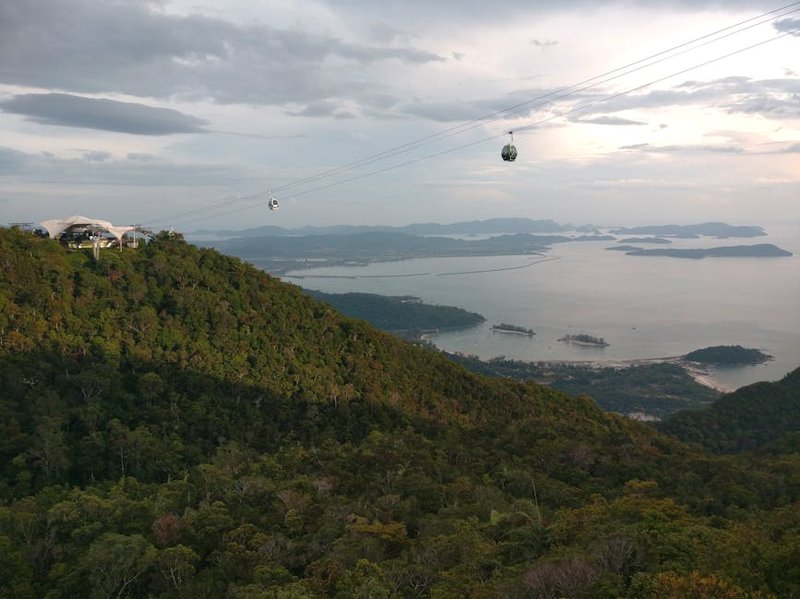
To understand the Sky Bridge, you first have to understand its foundation, and I don’t just mean the concrete pylons. The bridge is part of the Langkawi Cable Car system, which ferries visitors from the Oriental Village at the base to the peak of Mount Machinchang. But the mountain itself is the real star. The Machinchang Formation is composed of some of the oldest rock in Southeast Asia, sandstone that dates back over 500 million years. As the cable car ascends, you’re not just going up a hill; you’re traveling backwards through deep geological time, watching the landscape transform into jagged, prehistoric pinnacles.
The bridge, opened in 2004, was conceived as a way to give visitors an immersive, 360-degree experience of this ancient landscape. It wasn’t enough to just reach the top station; the designers wanted you to step into the vista. The initial design was ambitious—a single, curved deck. However, the bridge faced significant challenges, including closures for extensive renovations to strengthen its structure and improve visitor flow. This history of adaptation is key. The Sky Bridge isn’t a static monument; it’s a living piece of infrastructure that has evolved to balance accessibility with the harsh realities of mountain weather and heavy tourist traffic. Its story is one of human ambition meeting, and sometimes wrestling with, the immutable forces of nature.
Engineering on a Prayer: How This Thing Actually Stays Up
From the top station, the bridge doesn’t look real. It appears as a delicate ribbon flung across the chasm. The technical reality is both simpler and more brilliant. The 125-meter-long curved deck is suspended from a single, 82-meter pylon located higher up the mountain. Think of it not as a bridge supported from below, but as a balcony hung from above. A series of sturdy steel cables fan out from this central pylon, cradling the deck structure. This cable-stayed design is what allows for that breathtaking, unobstructed curve.
Getting to it is an adventure in itself. You take the cable car to the Top Station, and then you have a choice: a short, steep funicular ride down the mountainside to the bridge entrance, or a walk down a steep staircase. I took the funicular, a tiny train that clings to the cliff face, which felt like a final test of nerve before the main event. The deck itself is a sturdy metal grate, which is the first thing your brain rebels against. You can see straight down through it to the rainforest canopy 100 meters below. This, I learned, is intentional. That visceral, slightly terrifying connection to the depth below is part of the experience, forcing a raw engagement with your surroundings that a solid floor would completely negate.
The Real-World Application: It’s All About the Pivot
You might ask, what’s the “application” of a sightseeing bridge? Its primary function is obvious: tourism. But its real-world impact is more nuanced. For Langkawi, a duty-free island competing with tropical destinations across Southeast Asia, the Sky Bridge is a unique selling proposition. It’s not just another beach or temple; it’s a definitive, iconic experience. It drives the local economy, supports jobs from cable car operators to souvenir vendors in the Oriental Village, and has put Langkawi firmly on the global adventure-tourism map.
More personally, I saw its application as a psychological tool. I watched a young father gently coax his trembling daughter onto the grate, her small hands gripping the railing like a vice. By the midpoint, she was pointing at birds, her fear eclipsed by wonder. The bridge forces a pivot—a literal change in your path and a metaphorical shift in your focus from internal anxiety to external majesty. It’s a masterclass in using controlled exposure to create profound moments of personal triumph. The best time to visit Langkawi for clear skies is crucial here, as the experience is utterly transformed by weather.
The View vs. The Queue: Weighing the Experience
Let’s be brutally honest. The Sky Bridge has advantages and disadvantages that can make or break your visit.
Advantages:
- The Unmatched Vista: On a clear day, the 360-degree view of Langkawi’s islands, the Andaman Sea, and the primordial peaks is simply unparalleled. It’s the kind of view that recalibrates your sense of scale.
- The Engineering Thrill: For those interested in design, it’s a fascinating and accessible piece of infrastructure to experience firsthand.
- The Iconic Moment: You get that photo. The one that makes everyone back home gasp.
Disadvantages:
- The Crowds: This is the big one. I went during what I thought was shoulder season, and it was still packed. The bottleneck at the funicular and on the bridge itself can test your patience. You’re not having a serene, solitary communion with nature.
- Weather Dependency: The bridge is often closed for maintenance or due to high winds and lightning. The famous view can vanish in minutes behind rolling fog or rain. You pay your money and take your chance.
- The Commercial Grind: The journey up is marred by a heavily commercialized process—long ticket lines, crowded waiting areas, and the obligatory route through a gift shop. It can feel more like a theme park ride than a natural wonder at times.
A Case Study in Timing: My Two Visits
My relationship with the bridge is a tale of two visits. The first time, I made a classic rookie mistake. I arrived mid-morning, bought my “Standard” ticket, and joined a queue that snaked endlessly. By the time I reached the top, a classic tropical haze had settled in, muting the colors and obscuring the distant islands. The bridge was so crowded it felt like a conveyor belt. I was anxious, rushed, and slightly disappointed. I’d conquered my fear but missed the magic.
I learned my lesson. On my next trip, I did three things differently, which I now consider non-negotiable best practices:
- I Bought the “Fast Track” Ticket: The extra cost was the best money I spent in Langkawi. It bypassed what must have been a 90-minute main queue.
- I Went for the First Slot of the Day: I was at the ticket counter before it opened. The morning light was crisp, the air was cool, and for a glorious 20 minutes on the bridge, I shared it with only a handful of other people.
- I Checked the Weather Religiously: I used a live webcam of the peak (yes, they have one) the night before and morning of.
The difference was night and day. Without the crowd, the bridge transformed. I could hear the wind whistling through the cables and the calls of distant birds. I could stop and lean (cautiously) on the railing without causing a human traffic jam. The fear was still there, a low hum in the background, but it was now accompanied by a deep, quiet exhilaration.

The Alternatives: What Else is Up There?
Is the Sky Bridge the only way to experience Langkawi’s highlands? Not at all. The Telaga Tujuh Waterfalls offer a stunning, ground-level immersion in the jungle. For a different elevated perspective, the Langkawi Zipline through the rainforest canopy provides an adrenaline rush of a different flavor.
But the most direct comparison is the Mat Cincang Geoforest Park walkways around the Top Station itself. These are free with your cable car ticket and offer spectacular, stable platforms with panoramic views. For someone with severe acrophobia or limited mobility, these are a fantastic and still breathtaking alternative. However, they lack the visceral, “I’m walking on air” drama of the bridge. The Sky Bridge is an active experience; the walkways are observational platforms. One puts you in the landscape, the other lets you observe it.
Common Pitfalls and How to Sidestep Them
Based on my hard-earned experience, here’s what to avoid:
- Pitfall 1: Assuming a “Quick Trip.” Allocate at least 3-4 hours for the entire experience from arrival at Oriental Village to return.
- Pitfall 2: Wearing the Wrong Shoes. The surfaces can be wet, and the stairs are steep. Flip-flops are a terrible idea. Sturdy sneakers or hiking sandals are essential.
- Pitfall 3: Not Checking Closure Status. The bridge’s maintenance schedule can be unpredictable. Always check the official website or social media channels on the day of your visit.
- Pitfall 4: Going at Peak Hours. Mid-morning to mid-afternoon is the worst. Either be first in line or aim for the last slot, accepting the risk of changing light.
- Pitfall 5: Letting the Crowds Ruin It. If you find yourself in a crowd, practice patience. Find a spot near the curved section, plant your feet, and just look out, not down at the people. Let your periphery blur and focus on the horizon.
The Future: Preservation Over Novelty
The future of the Sky Bridge, in my opinion, shouldn’t be about making it longer or adding glass floors (a terrifying thought). The focus must be on sustainable preservation and experience management. The recent renovations show a commitment to structural integrity. The next step is managing the human impact. This could mean stricter hourly ticketing caps, even if it reduces daily revenue, to preserve the quality of the visit. Investing in more efficient, higher-capacity funiculars or a secondary access path would ease the brutal bottleneck.
The bridge’s magic is fragile—dependent on the pristine view and a sense of connection to the ancient geo-park. The challenge for authorities is to protect that magic from being loved to death. Perhaps the future involves more educational integration, using augmented reality at the viewpoints to explain the incredible geology beneath your feet, adding a layer of understanding to the awe.
Stepping Back onto Solid Ground
As I finally stepped off the bridge and back onto the solid rock of the mountain, my legs still felt like jelly, but my mind was clear. The Langkawi Sky Bridge is more than a checklist item. It’s a confrontation. It confronts you with your own fears, with the raw power of nature, and with the cleverness of human ingenuity. It’s imperfect—often crowded, sometimes closed, and undeniably commercial. But when the conditions align, when you find a pocket of space and a moment of quiet, it delivers an experience that borders on the sublime.
It taught me that the best views often lie just beyond the edge of our comfort zone. My advice isn’t just to go see it, but to go experience it. Plan wisely, pack your patience, wear good shoes, and be prepared to have your breath taken away—first by fear, and then by something infinitely more powerful: wonder.