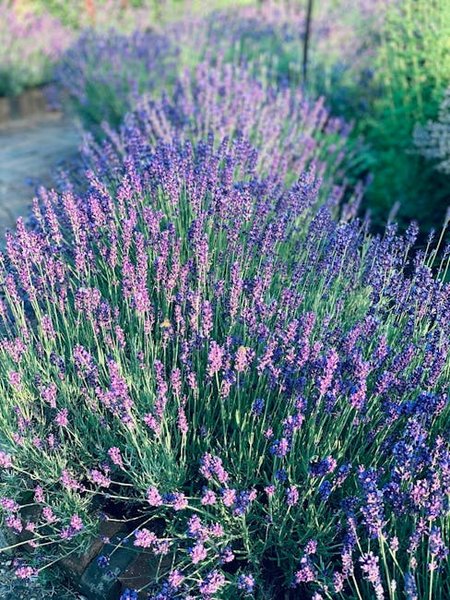
The Quiet Magic of a Lavender Garden: More Than Just a Pretty Scent
My affair with lavender began not with a grand plan, but with a failure. A decade ago, I planted a single, hopeful Lavandula angustifolia ‘Hidcote’ in a poorly-drained corner of my suburban garden. I’d seen the pictures—those waves of purple in Provence—and wanted a piece of that serenity. Within a year, it was a grey, woody skeleton, defeated by our heavy clay soil and my own ignorance. That dead plant, however, taught me more than any success ever could. It sparked a curiosity that grew into an obsession, transforming my entire approach to gardening and, in many ways, to life itself. A lavender garden, I’ve learned, is not just a planting scheme; it’s a living lesson in patience, ecology, and sensory joy.

From Ancient Apothecary to Modern Sanctuary
To understand lavender is to walk through history with your nose. The Romans used it in their baths (lavare, to wash, gives us its name) and strewed it on floors to perfume their villas and deter insects. In Tudor England, it was a staple of the “still room” for treating headaches and freshening linen. For centuries, it occupied a practical, almost utilitarian space in the human world—a medicine, a cleanser, a preservative.
The shift to the ornamental “lavender garden” is a more modern romance, largely cemented by the 20th-century infatuation with the gardens of Provence. Yet, even in its most aesthetic form, that ancient utility whispers beneath the beauty. This duality is what makes it so compelling. You’re not just creating a vista; you’re cultivating a resource. This historical context is crucial because it informs the plant’s very nature: it thrives on hardship (poor, alkaline, rocky soil, full sun) and offers generosity in return. It’s a resilient giver, a combination that feels profoundly needed in our modern gardens.
The Anatomy of a Thriving Lavender Garden: It’s All About the “Why”
Most people see a lavender plant. I see a survivalist. Understanding how lavender works is key to making it thrive, and it starts underground. Lavender is a Mediterranean native. Its technical genius lies in its adaptation to drought. Those slender, silver-grey leaves are designed to minimize water loss. A extensive, wiry root system seeks out moisture deep down. This is the first and most critical lesson: lavender hates wet feet. Root rot in winter is its primary assassin, not cold.
The process of creating a lavender garden, then, is an exercise in mimicry. You’re not “feeding” a plant; you’re recreating a hillside in southern France. This means drainage is paramount. On my heavy soil, I now plant on generous mounds or in raised beds filled with a mix of gritty compost and horticultural sand. The goal is to get water to flow away from the crown of the plant as quickly as possible. I learned this the hard way after that first ‘Hidcote’ debacle, a classic mistake to avoid with lavender.
Pruning is the other non-negotiable. Lavender’s habit is to become woody and splay open in the center if left untouched. The rule I follow religiously, passed down from a veteran nurseryman, is the “two-leaf” rule. After the main summer bloom fades, I shear off the flower stalks and about an inch of the current year’s soft growth, always making sure to leave a few sets of green leaves on the stem. Never cut into the old, brown wood—it rarely regenerates. This annual haircut keeps the plant compact, encourages new growth from the base, and prolongs its productive life from a few messy years to a decade or more of structured beauty.
A Tapestry of Uses: Beyond the Instagram Shot
The applications of a lavender garden are where its magic truly unfolds. Sure, the pollinator activity alone is worth the price of admission—my lavender borders hum with bees from dawn till dusk, a sound I find more soothing than any fountain. But the real-world uses extend far beyond the garden gate.
The Culinary: Not all lavender is edible, but varieties like Lavandula angustifolia ‘Munstead’ are mild and sweet. A few fresh buds in shortbread or steeped in cream for a panna cotta introduce a sophisticated, floral note that surprises and delights. I infuse local honey with dried buds, creating a golden syrup perfect for drizzling over goat’s cheese or sweetening herbal tea. It’s a direct, delicious link from garden to table.
The Practical: I make simple sachets with dried lavender for linen cupboards—a practice that feels wonderfully old-fashioned and effective. More importantly, I’ve found it to be a gentle deterrent for clothes moths. A strong brew of lavender stems (soaked in water for a week) makes a mild, fragrant spray for outdoor furniture to discourage flies. This isn’t hippie nonsense; it’s leveraging the plant’s natural phytochemicals, like linalool, which many insects find disagreeable.
The Therapeutic: This is the most personal application. The act of gardening itself is my therapy, but with lavender, the harvest is an extension of that calm. The process of cutting, bundling, and hanging bunches to dry is a ritual of seasonal mindfulness. Crumbling the dried flowers is a tactile, aromatic experience that instantly lowers my heart rate. While I don’t make complex essential oils (that’s a professional distillation process), the simple, ambient scent of a dried bouquet in a room has a palpable effect on the atmosphere of my home.
The Thorn Among the Flowers: Lavender’s Demands
For all its gifts, a lavender garden is not a low-maintenance fantasy. Let’s be honest about the disadvantages.
It is needy in its neglect. It demands specific, often contrived soil conditions to survive. It requires disciplined, annual pruning. In humid climates, fungal diseases like powdery mildew can be an issue, requiring good air circulation (another reason not to crowd them). It also has a finite lifespan. Even perfectly cared-for plants will eventually become woody and need replacing after 10-15 years.
Furthermore, the aesthetic is not for everyone. Its form is formal, structural, and best in mass plantings or hedges. A single, unpruned lavender plant can look scraggly and forlorn. It doesn’t have the blowsy, abundant charm of a cottage garden rose or the tropical lushness of a hosta. Its beauty is austere, architectural, and deeply seasonal—the glorious purple bloom in early-mid summer is relatively brief, though the silver foliage provides year-round interest.
Lessons from the Field: A Personal Case Study
My most educational project wasn’t in my own garden, but for a local café that wanted a “low-maintenance” sensory garden for its patio. They dreamed of Provence but had a shaded, north-facing courtyard. I tried to gently explain it was like asking for a cactus rainforest. They insisted.
We compromised with large, mobile terracotta pots filled with a very sharp, gritty mix. I planted ‘Phenomenal’, a variety bred for better humidity tolerance. For the first summer, it was a triumph. Customers loved it. Then came a wet, mild winter. Despite the drainage holes, the pots sat in perpetual damp. By spring, 70% of the plants were dead. It was a sobering, expensive lesson for the café owner in the non-negotiable needs of a plant.
The rebuild was a collaboration. We moved the garden to the one sun-baked corner, built a raised bed with rubble for drainage, and switched to more traditional, hardy varieties like ‘Grosso’ for its robust nature. Three years on, it’s thriving. This case study taught me that successful lavender gardening is often about managing expectations and being a stubborn advocate for the plant’s fundamental needs, even when it’s not what the client initially wants to hear.
What Else Gives That Silver-Grey Glow?
If your site is truly a shady, damp bog, forcing lavender is a recipe for heartache. But the desire for that silvery, aromatic, drought-tolerant aesthetic is still valid. Here’s how I think about alternatives:
- For Foliage & Drought Tolerance: Santolina (cotton lavender) is a fantastic substitute. It has similar, finely-cut silver foliage, thrives in the same conditions, and has cheerful yellow button flowers. It’s arguably even tougher.
- For Aromatic Foliage: Rosemary, especially prostrate forms, offers that herbal scent, culinary use, and similar sun-loving disposition. Its growth habit is different, but it fills a similar ecological niche.
- For a Softer Look: Nepeta (catmint) delivers the pollinator-friendly purple haze with far more tolerance for varied soils and less stringent pruning needs. It flops and flows where lavender stands upright.
These aren’t “better,” they’re different. Lavender’s unique combination of rigid form, iconic flower spike, and complex scent profile is ultimately irreplaceable. The comparison with alternatives is really about choosing the right plant for the right place.
The Future is Purple (and Diverse)
The outlook for lavender gardening is exciting. Breeders are developing cultivars that push the traditional boundaries. New varieties like ‘Silver Anouk’ offer incredibly compact, silvery forms perfect for containers and front-of-border edging. I’m trialling ‘Blue Spear’ for its reported exceptionally long bloom time. There’s also a growing interest in the less common species, like the fringed, rabbit-eared Lavandula stoechas, which brings a whole new shape and earlier bloom period to the palette.
More importantly, I see lavender gardens becoming anchors in a new kind of ecological planting. They are perfect partners for ornamental grasses, sedums, and other xeric plants in rain-scarce landscapes. They are biodiversity powerhouses in a single genus. The future isn’t just about recreating Provence; it’s about integrating this resilient, useful plant into our evolving understanding of what a responsible, beautiful garden can be.
Stepping into my garden on a July morning, secateurs in hand, the air thick with the scent of lavender and the sound of bees, I feel a deep connection to both the past and the future. This isn’t a static picture. It’s a dynamic, working ecosystem that I’ve learned to collaborate with, not command. That first dead plant was the best teacher I could have asked for. It forced me to listen, to learn the language of the soil and the needs of the plant.
A lavender garden, in the end, teaches you that true beauty and resilience are born from understanding and meeting fundamental needs—for drainage, for sun, for a careful cut. It offers its gifts freely, but only if you first provide the conditions it requires to live. That’s a quiet magic, and a lesson that extends far beyond the garden gate. So, if you’re thinking of starting one, begin not with the dream of endless purple, but with a handful of gritty sand and a sunny spot. Build the foundation. The lavender will do the rest.