The Living Museum: Why Malacca City Isn’t Just History, It’s a Conversation
I have a confession to make: I used to think of Malacca City as a postcard. For years, it was a place I’d recommend to visitors with a checklist in mind—see the red square, climb the hill, try the chicken rice balls. It was a beautiful, static diorama of Malaysian history. That changed for me on a sweltering Tuesday afternoon a few years ago, stuck in a traffic jam on Jalan Tun Tan Cheng Lock. As I inched past rows of Peranakan shophouses, their pastel facades baking in the sun, I wasn’t looking at the famous tourist street. I was looking through it. I saw a young woman hauling a sack of rice into a back-alway kopitiam that had been in her family for three generations. Next door, a craftsman was painstakingly applying gold leaf to a newly carved wooden sign, his movements a silent ballet of tradition. The history here wasn’t locked in a museum; it was the operating system of daily life. Malacca City, I realized, isn’t a relic you observe. It’s a living, breathing, and sometimes frustratingly chaotic conversation between its past and its relentless present. That’s the story I want to share.
A Palimpsest of Empires: The Layers Beneath Your Feet
To understand Malacca City today, you have to read it like a historical palimpsest—a manuscript where old text has been scraped away to make room for the new, but where the ghosts of the original writing still show through. The city’s genius, and its challenge, is that every major layer is still vividly present.
It begins, of course, with the Malacca Sultanate. Founded by Parameswara in the late 14th century, its strategic position on the strait made it the Venice of the East. This wasn’t just a local kingdom; it was a cosmopolitan hub where Malay, Chinese, Indian, and Arab traders created a lingua franca and a culture of commerce. You can feel this foundational layer in the rhythm of the place, in the mercantile buzz of the Jonker Street Night Market, a direct descendant of those ancient bazaars. The Sultanate’s legacy is the city’s DNA: trade, adaptation, and cultural fusion.
Then came the Portuguese. In 1511, they didn’t just conquer; they attempted to overwrite. A Famosa fortress, with its iconic Porta de Santiago gate, is the stark, heavy punctuation mark of this era. It’s military architecture, designed for defense and domination. I’ve spent hours sitting by the ruins, and there’s a different energy here—one of resilience and stubborn permanence. The Portuguese layer is like bedrock; unyielding and fundamentally altering the landscape.
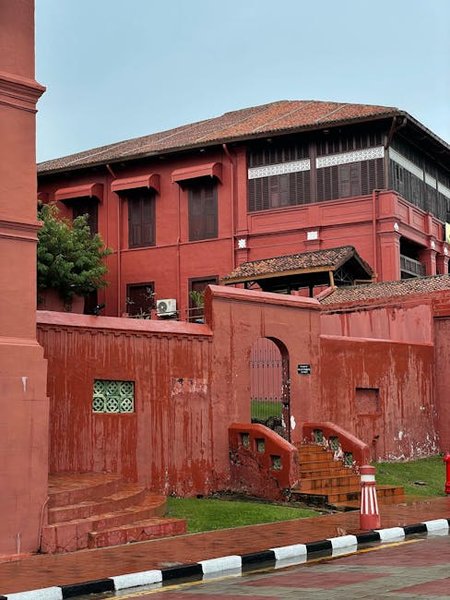
The Dutch arrived in 1641 and brought a different kind of order. Where the Portuguese built forts, the Dutch built civic squares and administrative buildings. The Stadthuys, that unmistakable terracotta-red complex, is the prime example. It speaks of trade management, meticulous record-keeping, and a Calvinist sensibility. Walking around the Dutch Square feels orderly, almost European, but the tropical heat quickly reminds you that you’re not in Amsterdam. This layer added civic planning and a distinctive aesthetic that now defines the city’s visual postcard.
Finally, the British took over in the 19th century. Their influence is subtler but pervasive in the urban fabric. They didn’t build a new epicenter; they expanded the city’s footprint. You see it in the colonial-era administrative buildings, the cricket green, and perhaps most importantly, in the town planning that extended beyond the historic core. The British layer is about infrastructure and the framework for a modern(izing) city.
The magic of Malacca City is that these layers aren’t segregated. They jostle against each other. A Portuguese ruin sits in the shadow of a Dutch church. A British-era fountain plays in a square surrounded by Dutch buildings. This isn’t neat history; it’s a tangled, vibrant archaeological site where people live and work.
How the City “Works”: The Delicate Mechanics of a Living Heritage Site
So how does a city function when it’s also a UNESCO World Heritage Site and a national treasure? The mechanics are fascinating and often fraught. Malacca City works through a constant, often tense, negotiation between three powerful forces: Preservation, Livelihood, and Development.
Preservation is enforced through strict heritage guidelines. If you own a shophouse in the core zone, you can’t just replace your wooden shutters with aluminum grilles. Paint colours, signage, even the type of roof tile can be regulated. This is administered by a complex web of local councils and federal heritage bodies. The goal is to maintain architectural authenticity, to keep the “Outstanding Universal Value” that earned the UNESCO designation.
Livelihood is the engine of the city. Families have run businesses in these shophouses for decades. A hardware store needs to receive truck deliveries. A café needs outdoor seating to survive. A resident needs air conditioning in the punishing heat. The needs of modern commerce and comfort constantly bump up against preservation rules. I spoke to a third-generation goldsmith on Harmony Street who showed me the original, now-illegal, gas pipe he used for soldering. He’s had to adapt to electric tools, not just for safety, but because heritage codes forbid altering the façade to run new lines. The city works because people like him find ingenious, often invisible, workarounds.
Development is the relentless pressure from outside. Tourism is the lifeblood, but it’s a double-edged sword. The demand for hotels, parking lots, and attractions is immense. Just look at the controversy surrounding the construction of the Melaka River Sky Tower or the various large-scale projects that have popped up on the city’s fringes. These projects promise economic growth but threaten to dwarf the historic scale of the core and alter its context entirely.
The city “works” when a balance is struck. The successful Melaka River rehabilitation project is a prime example. A once-polluted and neglected waterway was cleaned up, with walkways and landscaping added sensitively. It created a new public space, boosted tourism, and increased property values, all while enhancing—not destroying—the historic environment. It showed that development and preservation can be allies, not enemies.
Real-World Applications: More Than Just a Backdrop
Malacca City is often used as a backdrop, but its real-world applications are profound case studies in action.
Cultural Sustainability: The city is a masterclass in intangible cultural heritage. The Peranakan (Straits Chinese) culture isn’t displayed behind glass. It’s in the elaborate kebaya fashions still worn for special occasions, in the complex, labor-intensive flavours of nyonya cuisine like ayam pongteh or cendol, and in the intricate beadwork sold in shops. This isn’t performance; it’s lived tradition. The Baba & Nyonya Heritage Museum isn’t a recreation; it’s a former family home, and the guides often have personal stories connecting them to the items on display.
Urban Planning Textbook: For planners and architects worldwide, Malacca is a living lab. It poses the quintessential 21st-century urban question: How do you make a historic city viable for the future? Lessons from its successes (the river walk) and failures (traffic congestion in the core) are studied globally. The city’s experiment with car-free zones on weekends in the heritage area is a direct application of trying to reclaim public space for people, not vehicles.
The Tourism Tightrope: Malacca is a test case for managing mass tourism. The transformation of Jonker Street from a quiet street of antique shops to a packed, loud night market is a direct application of tourist economics. It’s incredibly successful financially, but it has also displaced some traditional businesses and altered the community’s character. The city is constantly applying and adjusting strategies—directional signage, tourist bus routing, promoting lesser-known areas like the Kampung Morten traditional village—to distribute the tourist load.
The Advantages and Inevitable Headaches
Advantages:
- Depth of Experience: You’re not just looking at old buildings. You’re tasting 500-year-old trade routes in the spices, hearing prayers from mosques, temples, and churches within a few hundred meters, and walking on cobblestones laid by different empires. The cultural immersion is unparalleled in Southeast Asia.
- Human Scale: Despite the crowds, the historic core is walkable. You can stumble upon a hidden courtyard, a tiny temple, or a brilliant mural around any corner. It encourages exploration.
- A Story of Resilience: The city’s narrative isn’t one of pristine preservation but of adaptation and survival. That story is inherently inspiring and relatable.
Disadvantages (The Headaches):
- Overtourism: On weekends and holidays, the core area can be unbearable. The charm evaporates in a crush of bodies and the din of souvenir hawkers.
- Traffic and Access: The historic street grid was not designed for cars and tour buses. Parking is a nightmare, and traffic snarls can quickly sour a visit.
- The “Disneyfication” Risk: There’s a creeping sense of the city becoming a theme park version of itself—a place for quick photos and cheap trinkets rather than genuine connection. The proliferation of gimmicky bicycle rickshaws blaring pop music, sadly, contributes to this.
- Stagnation Risk: If preservation rules are too rigid, the city becomes a museum where no one can afford to live. Buildings can become empty shells, beautiful but dead.
A Personal Case Study: Getting Lost on Purpose
My most valuable lesson in Malacca came from a deliberate mistake. Tired of the main streets, I decided to get purposefully lost in the residential lanes behind the tourist zones. I turned down a narrow alley called Lorong Hang Jebat. The sounds of the main road faded. I passed houses where laundry fluttered on bamboo poles and the smell of someone’s lunch—ginger, garlic, belacan—wafted through an open window.
I ended up at a small, unassuming Chinese clan temple tucked between two houses. An old caretaker, noticing my curiosity, waved me in. He didn’t speak much English, but with gestures and a few shared words, he showed me the altar, the ancestral tablets, and explained the temple was founded by Hokkien immigrants in the 1800s. He poured me a tiny cup of bitter tea. For twenty minutes, I wasn’t a tourist. I was a guest. That alley and that temple weren’t on any official “must-see” map, but they held the authentic soul of the city. It taught me that the real Malacca isn’t found by following the arrows on the tourist map, but by turning away from them.
Compared to the Alternatives
How does Malacca stack up against other historic cities in the region?
- Vs. George Town, Penang: They’re often mentioned together, but the feel is different. George Town has a more anarchic, artistic, and hipster energy. Its heritage is intertwined with a thriving, modern creative scene. Malacca feels more historical, more rooted in its grand narrative of empires. George Town is edgier; Malacca feels more stately.
- Vs. Hoi An, Vietnam: Both are UNESCO-listed port towns. Hoi An is more uniformly preserved, prettier in a picture-perfect way, but can feel more like a preserved set. Malacca is messier, more layered with different colonial histories, and more integrated with a living, working Malaysian city beyond its core.
- Vs. Singapore: Singapore’s preservation, like in Kampong Glam or Little India, is often pristine and highly curated, part of a sleek global city. Malacca’s preservation is more organic, more frayed at the edges, and feels less controlled. It’s the difference between a professionally restored painting and a well-loved, slightly faded family heirloom.
Common Pitfalls and How to Sidestep Them
Pitfall: The Weekend Warrior Rush. Coming on a Saturday, trying to see everything in 5 hours, and leaving frustrated by the crowds.
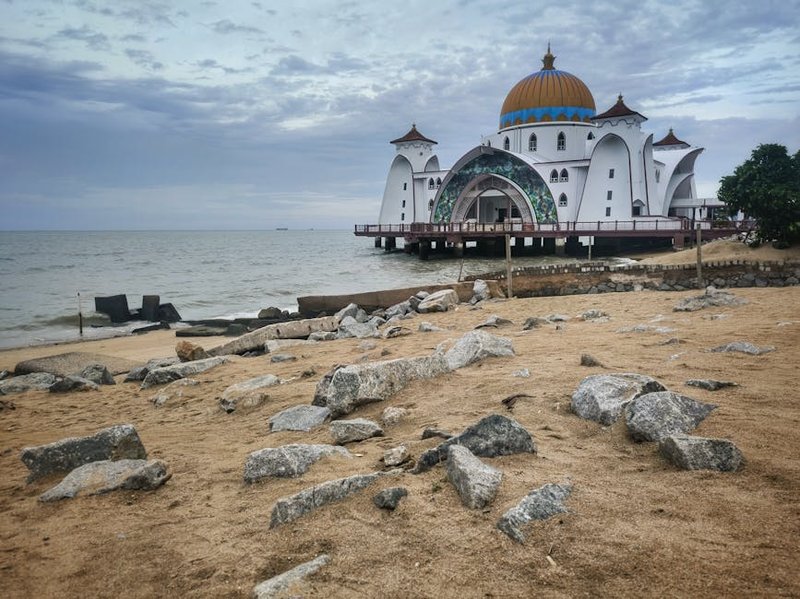
- Avoidance Strategy: Visit mid-week if possible. If you must come on a weekend, base yourself in the city. Explore the core very early in the morning (7-10 am) or later in the evening after the day-tripper buses have left. Use the crowded afternoons to visit sites further out, like the Strait of Malacca Mosque (Masjid Selat) or the Maritime Museum.
Pitfall: Sticking Only to Jonker Street. You’ll see the commercial carnival but miss the city’s heart.
- Avoidance Strategy: Dedicate time to the heritage neighborhoods. Walk the quiet streets of Kampung Morten, explore the Bukit China hill (one of the largest Chinese burial grounds outside China), and wander the streets north of the river like Jalan Kee Ann for a more local feel.
Pitfall: Treating it as a History Tour. Focusing only on dates and buildings.
- Avoidance Strategy: Engage with the living culture. Take a Peranakan cooking class. Visit a kris (traditional dagger) maker. Sit in a kopitiam and listen to the chatter. The history is in the people and their practices.
Pitfall: Underestimating the Climate.
- Avoidance Strategy: This is the tropics. Plan your walking for early morning and late afternoon. Drink way more water than you think you need. Seek out air-conditioned museums (like the Muzium Rakyat or the Submarine Museum) during the midday heat.
The Future: A Crossroads of Intent
Malacca City stands at a crossroads. One path leads toward becoming a fully optimized tourist product—clean, efficient, Instagram-friendly, but potentially soulless. The other path is harder: it requires nurturing the delicate ecosystem that makes it unique. This means implementing smarter tourism management (like timed ticketing for major sites), finding solutions for resident parking and logistics, and actively supporting traditional artisans and family businesses so they aren’t priced out.
The future will also be shaped by how the city integrates its stunning new infrastructure, like the Malacca International Airport and improved highways, without letting them overwhelm the historic scale. The goal shouldn’t be to stop time, but to guide its flow thoughtfully.
Malacca City taught me that heritage isn’t about freezing a place in amber. It’s about stewardship of a story that is still being written. It’s a city that has absorbed conquerors, adapted to upheaval, and constantly reinvented itself. The crumbling Portuguese fort, the meticulous Dutch square, the vibrant Chinese temple, and the buzzing modern café all exist in the same few square kilometers, in a state of perpetual, beautiful negotiation.
Your task as a visitor isn’t to tick off a list. It’s to listen in on that negotiation. Skip the crowded main drag for a quiet lorong. Choose a family-run teh tarik stall over a branded café. Let yourself get a little lost. The city’s true magic doesn’t shout from the red-painted buildings; it whispers from the weathered doorways and the steamy kitchen windows of the people who call this living museum home. That’s the conversation you won’t want to miss.