The River That Tells a Story: My Unlikely Love Affair with the Melaka River Cruise
I have a confession to make. I used to be a river cruise snob. Having drifted down the Seine in Paris and glided through the canals of Venice, I arrived in Melaka with a certain, let’s say, preconceived notion. The idea of a 45-minute boat ride up a modest Malaysian river felt like a tourist box to be ticked, a pleasant but forgettable interlude between plates of chicken rice balls and hunting for antiques on Jonker Street. I was, as it turns out, spectacularly wrong.
My first encounter was almost accidental. Seeking respite from the equatorial midday sun, I bought a ticket on a whim, more for the shade and breeze than any real expectation. What unfolded wasn’t just a boat ride; it was a living, breathing narrative of a city, told from its most intimate vantage point. It completely recalibrated how I understood Melaka. This isn’t just an attraction; it’s the city’s spine, its historical bloodstream, and its most dynamic canvas, all in one.
From Lifeline to Open Sewer to Liquid Canvas: A River’s Journey
To appreciate the cruise, you must first understand the river’s dramatic biography. For centuries, the Melaka River wasn’t a backdrop for tourism; it was the reason for Melaka’s existence. Founded in the 15th century by Parameswara, the river’s strategic position and deep harbour made it the epicentre of the spice trade. Chinese junks, Indian dhows, Arab vessels, and later Portuguese carracks would have lined these very banks. The river was the city’s commercial heart, its defensive moat, and its source of life.
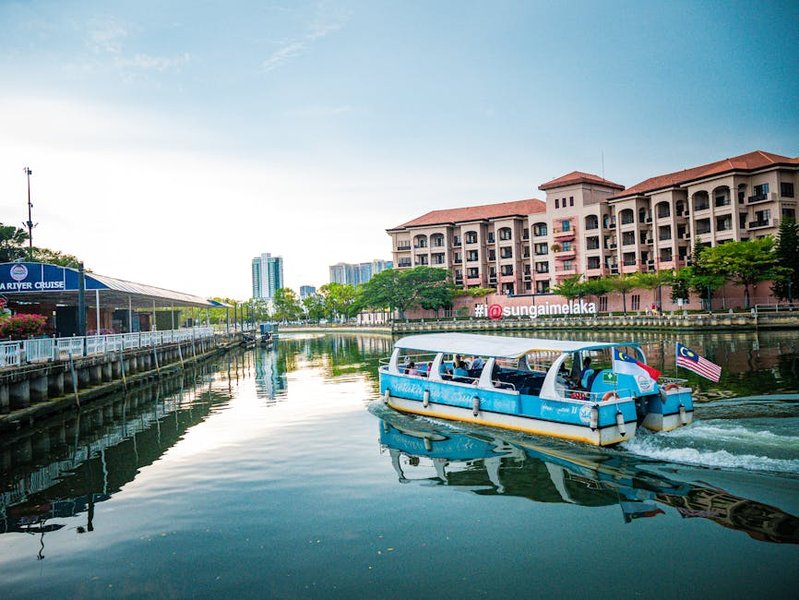
Fast forward to the late 20th century, and the story had turned sour. Neglect and rapid urbanisation had transformed the historic lifeline into an open sewer, polluted and forgotten. The beautiful shophouses turned their backs to it. It was a symbol of decay. The transformation that began in the early 2000s is nothing short of remarkable. A massive rehabilitation project dredged the river, installed tidal gates to manage water flow and quality, and built the walkways and infrastructure we see today. The Melaka River Cruise was a cornerstone of this rebirth—not just a tourist ride, but a statement of intent. It forced the city to face its river again, to clean it up and celebrate it. The cruise, therefore, is more than a trip; it’s a passenger on the river’s own story of redemption.
How It Works: More Than Just a Boat Ride
The mechanics are simple on the surface. You board one of the long, low-slung electric boats with their distinctive canopies at either the Muara Jetty (near the Maritime Museum) or the Taman Rempah Jetty (near the iconic Melaka River Square). The boats run continuously, and a ticket gives you a return journey along a set route, with commentary available in several languages through handheld devices or, on some boats, from a live guide.
But the technical genius is in the details. The use of quiet, electric motors is crucial. It means the journey is peaceful; you hear the water lap against the hull, the distant call to prayer, the chatter from riverside cafes—not the roar of a diesel engine. The route is carefully choreographed. It doesn’t just go from A to B; it meanders, offering a 360-degree view of the city’s layers. You pass under low bridges that make you duck instinctively, adding a touch of adventure. The tidal gates at the estuary are a fascinating piece of engineering, managing the delicate balance between river and sea that keeps the waterway viable.
The real “how,” though, is in the pacing. The cruise is slow enough to let you absorb the scenery but purposeful enough to cover a compelling cross-section of the city in under an hour. It’s a masterclass in urban storytelling from a unique perspective.
The Real-World Application: Seeing a City Through a New Lens
So, what does this cruise do? Its application is multifaceted.
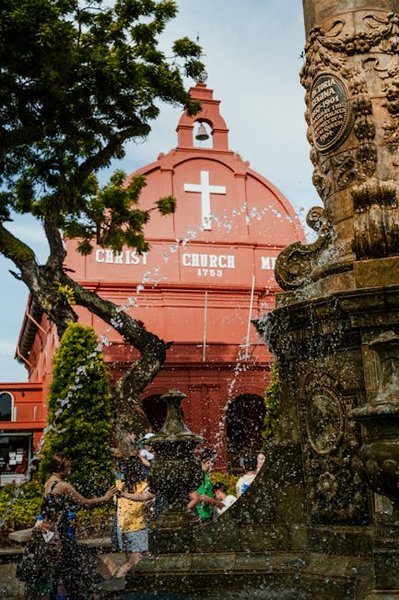
For the First-Time Visitor: It’s the perfect orientation. In one seamless journey, you see the colonial-era landmarks like the Dutch Square and Christ Church, the historic Kampung Morten (a traditional Malay village preserved on the riverbank), the bustling Chinatown with its iconic murals, and the modern developments near the mouth of the river. You get a spatial understanding of Melaka that is impossible to grasp while navigating its narrow, one-way streets. It answers the question, “How does this all fit together?”
For the History Buff: It’s a time machine. Floating past the ruins of an old fortification, the Kota Bridge, or the site of ancient shipyards, the commentary (if you listen) connects dots. You see why certain settlements sprang up where they did. You appreciate the river as a defensive barrier. I once listened to the tale of the infamous Laksamana Cheng Ho and his massive treasure fleet, and looking at the river’s width, the scale of that historical feat suddenly became awe-inspiringly real.
For the Culture & Art Enthusiast: This is where the cruise truly shines. The river walls have become one of Southeast Asia’s most impressive open-air galleries. The murals here aren’t just decorative; they’re narrative. You’ll glide past stunning, large-scale works that depict scenes from local folklore, historical events, and everyday life in old Melaka.
One of my favourites is the mural of a giant orang utan holding up a crumbling building—a poignant commentary on deforestation. Another beautifully depicts traditional wau (kite) flying. The cruise gives you the best vantage point to see these artworks in their entirety, framed by the water and the sky.
For the Photographer: The light. Oh, the light. Taking the cruise during the “golden hour”—about an hour before sunset—is a transcendent experience. The low sun bathes the pastel-coloured shophouses in a warm glow, and the reflections on the water are magical. The night cruise is a different beast entirely, where the city transforms into a twinkling spectacle of fairy lights and neon signs reflecting on the inky black water.
Weighing the Waters: The Good and the Less Good
Let’s be honest, no experience is perfect.
Advantages:
- Unique Perspective: It offers a view of Melaka you simply cannot get any other way.
- Educational & Entertaining: It seamlessly blends history, culture, and modern art in a digestible format.
- Accessible & Easy: It’s suitable for almost all ages and fitness levels. It’s a welcome break from walking.
- Great Value: For the price of a decent meal, you get a 45-minute narrated tour that frames your entire visit.
- Two Experiences in One: The day and night cruises feel like completely different trips. I recommend doing both if you can.
Disadvantages:
- Can Be Crowded: Especially on weekends and public holidays. You might be sharing the boat with a loud group, which can shatter the serenity. Pro-tip: Go on a weekday, or for the first or last trip of the day.
- Weather Dependent: A sudden tropical downpour can put a damper on things (literally). The boats are covered, but visibility plummets.
- The Commentary Hit-or-Miss: The pre-recorded tracks can sometimes be out of sync with what you’re seeing, or the audio quality can be poor. Don’t be afraid to just turn it off and enjoy the silence and scenery.
- A Linear Experience: You’re on a set path. You can’t stop and explore something that catches your eye. It’s a teaser, not a deep dive.
A Personal Chronicle: The Cruise That Changed My Itinerary
I’ll share a specific case study from my third visit. I had a friend, a seasoned traveller who “didn’t do tourist boats.” I insisted. We took the sunset cruise. As we drifted past Kampung Morten, a traditional Malay house was having a small family gathering in its backyard, which extends over the river on stilts. They waved; we waved back. My friend, a photographer, captured a stunning shot of a child smiling from the veranda, with the golden river and our boat in the foreground.

That moment was inaccessible by road. It was a genuine, unscripted human connection facilitated by the river. After the cruise, my friend’s entire attitude changed. Instead of just following a food map, he wanted to find the streets behind the murals we’d seen. The cruise had provided a visual index, and he now wanted to read the full chapters. We spent the next day hunting down the locations of the murals from street level, which led us into tiny alleyways, artisan shops, and cafes we would never have found otherwise. The cruise didn’t replace exploration; it became its catalyst.
Alternatives? There’s Only One Real One.
People sometimes ask about alternatives. You can walk the Melaka River Walk paths on either side, and you absolutely should. It allows you to linger at the murals, read the informational plaques, and pop into the riverside bars and restaurants. But it’s a fragmented experience. You see the details up close but miss the grand, flowing narrative.
The walking path and the cruise are complementary, not competitive. The cruise is the overview, the thesis statement. The walk is the detailed footnote, the close reading. You need both for full comprehension. There’s no other vehicle-based tour that offers the same uninterrupted, riverside perspective.
Common Pitfalls and How to Steer Clear
Pitfall: Going at Peak Rush Hour. Showing up at 2 PM on a Saturday and expecting a tranquil journey is a recipe for disappointment.
- Avoidance: Go early (10 AM) or late (last cruise before sunset). Weekdays are always better.
Pitfall: Sitting on the Wrong Side. This matters more than you think.
- Avoidance: When boarding from the Muara Jetty, sit on the RIGHT-HAND SIDE of the boat for the outbound journey. This gives you the best view of the major murals and Kampung Morten. You can switch sides on the return leg.
Pitfall: Treating it as a Checklist Item. Just sitting there, passively waiting for it to be over.
- Avoidance: Engage. Put the phone down. Look at the details—the architecture of the bridges, the laundry hanging out, the cats sleeping on ledges. Let the city wash over you.
Pitfall: Not Dressing for the Microclimate. The river can be breezy, and tropical sun is fierce.
- Avoidance: Bring a light layer. Wear a hat and sunscreen for day cruises. Even if it’s cloudy, you can get burned on the water.
The Future Current: Where Does the River Flow From Here?
The Melaka River Cruise has been a phenomenal success, but its future will be defined by how it manages that success. The challenge will be balancing preservation with pressure. More boats could mean more congestion and noise, detracting from the charm. There’s talk of extending the route further inland, which could open up new historical areas but also brings logistical and environmental questions.
I hope the future involves even deeper integration with the community. Perhaps special “heritage” cruises with live storytellers from Kampung Morten, or “artist talk” cruises where one of the muralists comes on board. The river has the potential to be a more dynamic stage for Melaka’s living culture, not just its history.
The most exciting prospect is the continued evolution of the riverbanks themselves. As more cafes, galleries, and small businesses thrive along the walkways, fed by the constant flow of cruise passengers, the area becomes more vibrant. The cruise isn’t the end point; it’s the engine for a wider riverside renaissance.
That first cruise I took out of sheer laziness ended up being the most insightful hour of my trip. It taught me that the best way to understand a city is often to find its original rhythm, its ancient pulse. In Melaka, that pulse is the river. The Melaka River Cruise isn’t just a pleasant boat ride; it’s an essential primer, a moving poem, and a reminder that cities, like people, are best understood from the inside out, along the channels where their life first began. It turned a sceptic into a devotee. My advice? Don’t just take the cruise. Let it take you. See where the river leads you, both on the water and long after you’ve stepped back onto dry land. You might just find, as I did, that it changes your entire course.