The Mountain That Remembers: My Journey Up and Down Mount Kinabalu
I didn’t come to Mount Kinabalu for the summit. At least, that’s what I told myself as I stood in the pre-dawn darkness at the Timpohon Gate, my headlamp beam cutting a shaky path into the mist. I’d come, I insisted, for the journey, for the unique ecology, for the stories. But as anyone who has ever stood at the base of this granite giant knows, Kinabalu has a way of rewriting your intentions. It’s not just a mountain you climb; it’s a presence you experience, a slow, humbling conversation between your own fragile body and the ancient, indifferent rock of the earth. My first ascent, over a decade ago, was less a conquest and more an introduction to a teacher. And like any good teacher, Kinabalu has lessons that unfold long after you’ve left its slopes.
A Sacred Pile of Granite: The Soul of Sabah
To understand Kinabalu, you must first understand that it is not an inanimate object to the people of Sabah. It is Aki Nabalu, the “revered place of the dead” in the Dusun language. Local legend tells of a Chinese prince who, after slaying a dragon, settled on the mountain, and his spirit is said to reside there, guarding a massive pearl. For centuries, the Kadazan-Dusun people would conduct rituals for safe passage, placing offerings of eggs at the Rasau rock, a practice some respectful climbers quietly continue today.
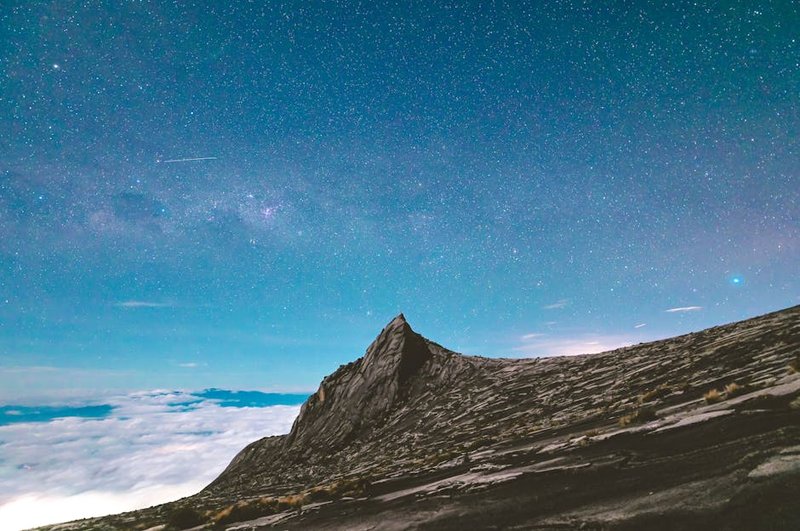
This spiritual context is crucial. It frames the mountain not as a challenge to be dominated, but as a sacred entity to be approached with respect. This ethos was tragically underscored in 2015 when a 5.9 magnitude earthquake struck the region, causing massive rockfalls that claimed 18 lives, including mountain guides and climbers. The event was a brutal reminder of the mountain’s raw power. In the aftermath, the climbing route was closed for months, and when it reopened, it was with a renewed, almost palpable sense of reverence. The quake scars are still visible—gashes of fresh, pale granite on the summit plateau—serving as a permanent memorial and a sobering lesson in humility.
How the Mountain “Works”: A Climber’s Blueprint
Technically, climbing Kinabalu is a straightforward two-day affair, but that simplicity is deceptive. The standard route isn’t a technical climb requiring ropes and axes; it’s a relentless, stair-master-from-hell trek that tests your cardiovascular endurance and mental fortitude.
Day One is a 6km trek from Timpohon Gate (1,866m) to either Panalaban or the newer Laban Rata Resthouse (at 3,272m). You gain about 1,400 meters in elevation over a well-maintained trail of stone steps and forest paths. The ecosystem shifts palpably every few hundred meters: from lush lowland rainforest into the surreal, moss-draped world of the cloud forest, where pitcher plants (Nepenthes) dangle like otherworldly ornaments and orchids cling to gnarled branches. The air thins, the temperature drops, and your pace inevitably slows. The key here is slow and steady—“Pelan-pelan” as the guides say. Rushing leads only to exhaustion and altitude sickness.
You overnight at the resthouse, attempting to sleep in the thin, cold air before a 2 AM wake-up call for the summit push. Day Two is the crux. In darkness, guided by headlamps, you tackle the granite slabs above the tree line. This is where the “via ferrata” sections come in—steel ropes fixed to the rock face to assist you up the steeper sections. The most famous is the Low’s Peak Circuit, a thrilling traverse along narrow ridges. The final push up the summit dome is a scramble on a rope hand-line.
The goal is to reach Low’s Peak (4,095.2m) for sunrise. And here’s the thing about the summit: it’s not guaranteed. I’ve seen strong hikers turned back by sheer exhaustion, pounding headaches from the altitude, or the mountain’s famously capricious weather. On my first attempt, a bank of cloud rolled in just as we reached the summit plateau, obscuring the famed sunrise. I was bitterly disappointed until my guide, an older man named Johan, simply smiled and said, “The mountain showed you its other face. It is still beautiful.” He was right. The swirling mist had a silent, majestic drama all its own.
More Than a Checkmark: The Real-World Pull of Kinabalu
So why do over 20,000 people a year subject themselves to this? The applications of a Kinabalu climb extend far beyond a trophy photo.
- A Biodiversity Pilgrimage: Kinabalu Park is a UNESCO World Heritage Site and one of the world’s most important biological sites. For botanists and naturalists, it’s a living laboratory. The mountain’s isolation and dramatic elevation gradient have created explosive speciation. You’re walking through a museum of evolution, from the carnivorous pitcher plants to the elusive Kinabalu giant red leech (harmless, but startling!). I once spent an hour with a researcher who was cataloging moss species on a single boulder; he estimated there were over fifty different types in that one square meter.
- The Ultimate Team-Building Exercise: I’ve guided corporate groups up Kinabalu, and it’s a fascinating social experiment. In the office, hierarchy rules. On the mountain at 3 AM, with legs of lead and lungs burning, titles dissolve. The CEO is as vulnerable as the intern. Success depends on mutual encouragement, shared resources (water, snacks, moral support), and a collective pacing strategy. The bonds forged in that shared struggle are more authentic than any off-site retreat.
- A Personal Crucible: For many, it’s a rite of passage. I’ve climbed with cancer survivors celebrating remission, with parents and their teenage children seeking a shared accomplishment, and with individuals simply trying to prove something to themselves. The mountain provides a clear, physical metaphor for perseverance. You can’t cheat the altitude. You must simply put one foot in front of the other, again and again. The summit, when you reach it, is less a victory and more a quiet acknowledgment of your own resilience.
The Two Sides of the Coin: Weighing the Kinabalu Experience
Advantages:
- Accessibility: It’s a non-technical summit of a significant mountain. With reasonable fitness and determination, many can achieve it.
- Infrastructure: The hut system (Laban Rata) is a luxury compared to high-altitude camping. Hot meals and a (cold) bed make a huge difference.
- Guided Necessity: The requirement to hire a local guide is a brilliant policy. It provides employment, ensures safety, and enriches the experience with local knowledge. My guides have pointed out rare flowers, shared folk tales, and literally pulled me up when my energy flagged.
- Concentrated Biodiversity: Nowhere else on Earth can you traverse such a range of ecosystems in such a short distance.
Disadvantages & Challenges:
- Cost: It’s expensive. Park fees, permits, guide fees, and accommodation add up, putting it out of reach for many budget travelers.
- The “Conveyor Belt” Effect: Its popularity means you are rarely alone. The 2 AM summit trail can feel like a slow-moving line of headlamps. The sense of wilderness solitude is sometimes compromised.
- Altitude Roulette: Anyone can be affected, regardless of fitness. I’ve seen marathon runners laid low by nausea and headaches while less-fit, slower-paced individuals summit comfortably. It’s unpredictable.
- Weather Vulnerability: The summit is often shrouded in cloud by 8 AM. If your pace is too slow, you might miss the view entirely.
Learning the Hard Way: A Personal Case Study in Hubris
My second climb was where I learned my most valuable lesson. Flush with confidence from my first “successful” (cloudy) summit, I assumed I knew the drill. I skimped on training. I packed too much gear. I was chatting and setting a brisk pace on Day One, leaving my two first-time climber friends behind.
By kilometer 4, I had a blister. By kilometer 5, a twinge in my knee. By the time I limped into Laban Rata, I was exhausted, in pain, and wracked with guilt for not pacing with my group. My friends, who had taken it slow and steady, arrived an hour later feeling tired but strong. That night, my knee throbbed, and I faced a terrible choice: push for the summit and risk serious injury, or stay behind.
I stayed. Watching my friends’ headlamps disappear into the darkness was a profound exercise in swallowing pride. But as the sun rose, sitting on the deck with a hot tea, watching the granite peaks turn gold, I had a different kind of summit experience—one of acceptance. The mountain had reminded me that its primary lesson isn’t about reaching the top; it’s about listening—to your body, to the environment, to the wisdom of a slower pace. My friends returned, elated and exhausted, and my role shifted from leader to celebrant. It was a better, if harder, lesson.
Kinabalu vs. The Alternatives: Where Does It Stand?
How does Kinabalu compare to other regional climbs?
- Vs. Mount Rinjani (Indonesia): Rinjani is tougher. It involves camping, longer days, and a steep, loose ash scramble to the rim. Kinabalu is more structured and “comfortable.” Rinjani offers a stunning crater lake; Kinabalu offers unparalleled biodiversity and the via ferrata experience.
- Vs. Fansipan (Vietnam): “The Roof of Indochina” is often a multi-day trek through jungle with basic camping. It feels more rugged and less regulated than Kinabalu. The summit is often crowded now due to a new cable car, which creates a very different dynamic.
- Vs. Himalayan Treks (e.g., Everest Base Camp): These are of a different magnitude entirely—longer, higher, and requiring real expedition planning. Kinabalu is a perfect introduction to high-altitude trekking without the weeks-long commitment.
Kinabalu’s niche is that it’s the most accessible major mountain in Southeast Asia. It’s your best chance to stand on a legitimate, significant summit without being a mountaineer.
Pitfalls and How to Sidestep Them
- Underestimating the Stairs: “It’s just a walk-up,” they say. Train on staircases or steep hills with a loaded pack. Your quuts will thank you.
- Packing Like a Packhorse: Every gram counts. Leave the jeans, the heavy books, the extra shoes. Merino wool layers, a quality shell, a headlamp, and broken-in boots are your core kit.
- Ignoring the Altitude: Hydrate relentlessly from the moment you arrive in Kota Kinabalu. Go slow. If you feel a headache or nausea, tell your guide immediately. Diamox can help some, but it’s not a substitute for proper acclimatization.
- Disrespecting the Rules and Culture: This is a sacred mountain. Don’t litter, don’t stray from the path, don’t remove plants or rocks. Listen to your guide. Their knowledge is born of hundreds of ascents and deep cultural ties.
- Being a Slave to the Summit: If weather turns foul or your body screams no, have the courage to turn back. The mountain isn’t going anywhere. I’ve met climbers who failed to summit but had a richer, more respectful experience than those who bulldozed their way up.
The Path Ahead: Kinabalu’s Future
The future of Kinabalu hinges on sustainable balance. Post-earthquake, the park authorities have wisely limited daily climber numbers. The focus is shifting from sheer volume to quality of experience and conservation. There’s growing interest in the longer, more challenging Mesilau Trail as an alternative start point, which could help disperse crowds.
The real opportunity lies in education. Interpretive centers, guided nature walks on the lower trails, and programs highlighting the work of researchers can help visitors appreciate the mountain beyond the summit selfie. The via ferrata courses, some of the highest in the world, already offer a unique adventure tourism model that combines safety with adrenaline.
Ultimately, I hope Kinabalu’s legacy is not as a checkbox on an adventure list, but as a gateway. A gateway to understanding high-altitude ecosystems, to respecting indigenous worldviews, and to learning about one’s own limits and capacities.
The Descent is Part of the Climb
Leaving Kinabalu, your legs wobbly and your mind full, you realize the summit was only the halfway point. The long descent back to Timpohon Gate is its own kind of test—a monotonous, joint-pounding reversal of your upward journey. But it’s in this return to the lowlands that the mountain’s lessons begin to settle. The ache in your muscles is a memory of the effort. The photos on your phone seem inadequate to capture the scale. And you carry with you a quiet respect for that massive granite spine, for the guides who know its every mood, and for the fragile, incredible world of orchids and mosses that clings to its sides.
Kinabalu doesn’t give you a summit. It gives you a story—one of effort, humility, and the breathtaking beauty of a world operating on a scale far grander than our own. You don’t conquer it. You visit it. And if you listen closely, you might just learn something. I know I did.