Pantai Cenang: The Beach That Taught Me to Slow Down
I have a confession to make: I used to be a terrible tourist. My travel itineraries were military operations, my days a blur of checklists and photo ops. I’d arrive at a destination, consume its highlights with a kind of frantic hunger, and leave exhausted, my memories already feeling like someone else’s postcards. All that changed on a sweltering afternoon a few years ago, when I first stumbled, sun-dazed and schedule-weary, onto the sands of Pantai Cenang.
I’d come to Langkawi, Malaysia’s archipelago of 99 islands, with the usual plan. But after a morning of ticking boxes, I found myself drawn away from the tour bus route. What I discovered wasn’t just a beach; it was a masterclass in the art of letting go. Pantai Cenang isn’t a static postcard scene. It’s a living, breathing organism—a two-kilometer stretch of golden sand on Langkawi’s western coast that operates on its own unique, unhurried frequency. It’s where the jungle meets the Andaman Sea, where traditional fishing boats bob beside modern yachts, and where the day’s rhythm is set by the tides and the call to prayer, not by a wristwatch.
From Fishing Village to Traveler’s Haven: A Gentle Evolution
To understand Cenang today, you have to appreciate its quiet history. Not so long ago, this was primarily the domain of local fishermen. The beach was a workplace, not a playground. Villages dotted the coastline, their lives intricately tied to the sea’s bounty. The development that came was, thankfully, not the kind that bulldozes character. It crept in slowly. A few guesthouses for the adventurous backpackers trickling onto Malaysia’s tourist trail in the 80s and 90s. A restaurant here, a dive shop there.
The real turning point was Langkawi’s designation as a duty-free port in 1987 and its push for geopark status (achieved in 2007). Infrastructure improved, but crucially, the soul of the place wasn’t paved over. You can still see this layered history in the architecture. Walk down the main strip, and you’ll pass century-old wooden kampung houses sitting comfortably beside modern resorts. You’ll see elderly men mending nets under the shade of a casuarina tree, just a stone’s throw from a trendy coffee shop serving flat whites. This isn’t a theme park version of culture; it’s a genuine, slightly messy, and beautiful coexistence.
How Pantai Cenang “Works”: The Ecosystem of Ease
So, what’s the secret? How does this place function so effortlessly while catering to everyone from budget backpackers to luxury seekers? It’s all about its decentralized, choose-your-own-adventure design.
Think of the beach itself as the main artery. During the day, it’s a public park. Families spread out mats for picnics, kids build sandcastles, couples stroll aimlessly. The water is shallow and warm for hundreds of meters, making it incredibly safe for swimmers of all ages. Parallel to the beach runs the main road, Jalan Pantai Cenang. This is the commercial spine, buzzing with life. But unlike some beach towns that feel like oppressive market stalls, Cenang’s businesses spill out informally. You’re just as likely to be beckoned by the smell of grilled satay from a streetside hawker as by a hostess at a sleek bistro.
The magic is in the permeability. You can dip from the beach into a shop for a cold drink, cross the road to rent a scooter, then slip back onto the sand without ever feeling you’ve entered a “tourist zone.” The services are there—dive centers for trips to Pulau Payar’s marine park, parasailing operators, jet ski rentals—but they don’t dominate the landscape. They’re options, not obligations.
At its core, Pantai Cenang works because it respects its primary asset: natural leisure. The sunset isn’t a backdrop for a sales pitch; it’s the evening’s main event. Every day, as the sun begins its descent over the distant islands of Tarutao, a quiet migration happens. People emerge from hotels, guesthouses, and restaurants, cold drink in hand, to claim a spot on the sand. There’s no admission fee, no reserved seating. It’s a communal, silent appreciation of a daily miracle. That shared experience is the glue that holds Cenang’s eclectic community together.
Real-World Applications: More Than Just a Tan
Calling Pantai Cenang just a “beach holiday” undersells its versatility. Through my repeated visits, I’ve seen it serve as a setting for a remarkable range of human experiences.
For the digital nomad or remote worker, it’s a productivity hack with a sea view. The combination of reliable (if not always lightning-fast) wifi, an abundance of cafes with power outlets, and the built-in reward of a sunset swim creates a perfect work-life balance. I’ve drafted reports at Yellow Cafe and answered emails at The Cliff, the stress of deadlines melting away with each glance at the horizon.
For families, it’s a stress-relief valve. The shallow, calm waters are a godsend for parents of young children. Attractions like the Underwater World Langkawi provide an easy, air-conditioned escape for a few hours, while the beach itself is a free, endless playground. I’ve watched multi-generational families from Kuala Lumpur and Singapore settle in for days, the grandparents content in a beach chair, the teens off on a jet ski, the toddlers paddling in the shallows—all happily coexisting.
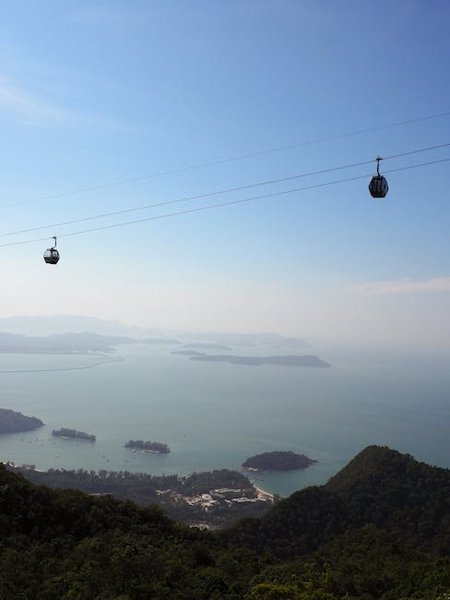
For the adventure seeker, it’s a brilliantly functional base camp. Cenang is the logistical hub for exploring Langkawi’s wonders. From here, you can easily book a mangrove kayaking tour through Kilim Geoforest Park, take a sunset cruise around the islands, or rent a car to explore the winding roads to Telaga Tujuh waterfalls or the Langkawi SkyCab. You return from a day of exploration to the comfort of great food and a familiar bed.
Perhaps most importantly, for the weary soul (as I was), it’s a rehabilitation center for the over-scheduled. The application is simple: practice doing nothing. Read a book in a hammock. Watch the hermit crabs scuttle. Order another fresh coconut. Cenang’s environment is engineered to de-program the urge to be constantly productive.
The Flip Side of Paradise: Shadows on the Sand
It would be dishonest to paint a picture of unblemished perfection. Pantai Cenang’s very success is its greatest challenge. During peak season (December-January, major holidays), the main strip can feel congested. The charm of a quiet beachside road evaporates in a tangle of scooters and cars. Some sections of the beach, particularly in front of the biggest resorts, can get crowded.
There’s also the delicate issue of development pressure. Every time I return, I hold my breath, looking for signs that the scale has tipped. A new, monolithic hotel that doesn’t fit the low-rise vibe? A chain store displacing a family-run business? So far, the balance has held, but it feels perpetually precarious. The litter left by a minority of irresponsible visitors is a constant battle, fought daily by hard-working cleaners.
And then there’s the weather. The southwest monsoon (roughly May to October) brings heavier rains and rougher seas. While it rarely rains all day every day, and you can find great deals during this period, it does transform the experience. The glassy, calm sea can become a churning grey expanse, and beach days are less guaranteed. It’s a trade-off: fewer crowds for less predictable sunshine.
A Personal Chronicle: Lessons Written in Sand and Sea
My own journey with Cenang is a series of snapshots that taught me more than any guidebook. There was the time I, the “efficient” traveler, tried to cram in a mangrove tour, a visit to the sky bridge, and a beach afternoon all in one day. I spent most of it in a taxi, stressed and sweating, seeing everything and experiencing nothing. I returned to Cenang at sunset, frustrated, and flopped onto the sand. As the sky exploded into color, a local vendor sat down next to me, not to sell anything, but just to share the view. “Lambat-lambat,” he said with a smile. “Slow-slow.” It was the best travel advice I’ve ever received.
Another lesson came from a failed plan. I’d booked a highly-rated seafood dinner at a fancy restaurant further north. On the way, my scooter got a flat tire outside a simple, family-run warung (eatery). While it was being fixed, the family insisted I join them for a meal. What followed was a feast of grilled fish, sambal belacan, and local vegetables, eaten with my hands, accompanied by stories and laughter. It cost a fraction of my planned dinner and was a hundred times more memorable. Cenang constantly reminds you that the best moments are often the unscripted ones, found just off the main drag.

Cenang vs. The Alternatives: Finding Your Fit
Langkawi itself offers other beach experiences, and choosing the right one matters. Pantai Tengah, just to the south, is often mentioned in the same breath. It’s Cenang’s slightly quieter, more resort-focused sibling. The beach is just as beautiful, but the atmosphere is more sedate, with higher-end spas and quieter bars. If your perfect day ends with a cocktail in a sophisticated lounge rather than a beer at a beachfront reggae bar, Tengah might be your pick.
Then there’s Datai Bay or Tanjung Rhu on the island’s north. These are in another league entirely—secluded, ultra-luxurious enclaves with pristine, private-feeling beaches. The experience is about exclusive tranquility and impeccable service. You trade the vibrant, messy energy of Cenang for pristine serenity and a significantly higher price tag.
For me, Cenang wins because of its democratic vibrancy. It has energy without being manic, convenience without being generic. It feels lived in. You get the sense that real life, in all its forms, is happening here, not just a curated tourist performance.
Common Pitfalls and How to Sidestep Them
Based on my own missteps and observations, here’s how to truly sync with Cenang’s rhythm:
- Pitfall 1: Staying Only on the Main Strip. The heart of Cenang beats just behind the front line. Wander down the side lanes. You’ll find fantastic local food courts, quieter guesthouses, and a glimpse of everyday life.
- Pitfall 2: Over-relying on Taxis. Rent a scooter or a car for at least a day or two. The freedom to explore the island at your own pace is invaluable, and parking is relatively easy. Agree on taxi fares before you get in.
- Pitfall 3: Eating Only at Waterfront Restaurants. The food with the best view isn’t always the best food. Some of the most incredible meals I’ve had were at unassuming places like Wonderland Food Store or the night market. The nasi kandar at Restoran Haji Ali is legendary for a reason.
- Pitfall 4: Ignoring the Tides. Check the tide chart. A wide, glorious beach at noon can become a narrow strip by evening, and vice-versa. Plan your beach time accordingly.
- Pitfall 5: Forgetting It’s a Muslim-Majority Area. While Langkawi is liberal, it’s respectful to dress modestly when away from the beach. A cover-up over your swimwear when walking through town is appreciated.
The Future: Riding the Wave with Care
The future of Pantai Cenang hinges on a single word: sustainability. Not just environmental (though the protection of its mangroves and marine life is critical), but cultural and experiential sustainability. Can it grow without losing its soul? The community seems aware of the tightrope they walk. There’s a growing emphasis on eco-activities, support for local artisans, and preserving the low-rise aesthetic.
I believe its future lies in deepening rather than widening its appeal. Promoting the off-season’s lush green beauty, championing local guides who share authentic stories, and ensuring development remains human-scaled. The goal shouldn’t be to become another generic tropical hotspot, but to become a benchmark for how a community can share its home with the world without selling its heart.
Pantai Cenang didn’t give me a perfect holiday; it gave me a new travel philosophy. It’s a place that rewards presence over planning, curiosity over checklists. It’s a reminder that sometimes the most profound journey is the one where you stop rushing and simply allow a place to reveal itself to you, wave by gentle wave, sunset by spectacular sunset.
It’s more than a destination on a map. It’s a state of mind. And whenever life starts feeling too much like a frantic itinerary, I close my eyes and picture that long, curving beach, the sound of the casuarinas in the breeze, and the feeling of warm sand underfoot. I hear the vendor’s voice: “Lambat-lambat.” Slow-slow. And I know exactly where I need to return to, to remember how.