The Cool Breeze and the Crowds: My Love-Hate Relationship with Penang Hill
I’ll never forget my first ascent. It was a sweltering December afternoon, the kind of heat that makes the air in George Town feel like a warm, damp towel. Seeking refuge, I joined the queue for the funicular railway to Penang Hill, or Bukit Bendera as it’s known locally. I was expecting a nice view, maybe a cool drink. What I got was a full-body recalibration. As the little blue train clattered its way up the near-vertical track, the dense, humid jungle gave way to something else entirely. Stepping out at the Upper Station, a crisp, cool breeze—a genuine sejuk—hit my face. The temperature had dropped a good 5-7 degrees Celsius. In that moment, I understood, viscerally, why this place has been a sanctuary for centuries. It wasn’t just a hill; it was an escape hatch.
/images/Penang_Hill_(Bukit_Bendera)_overview.jpg)
That was a decade ago. Since then, I’ve been up and down that hill more times than I can count—with visiting friends at peak hour, alone on quiet weekday mornings, for work, for photography, and sometimes just for that breeze. I’ve seen it change, watched it grapple with its own popularity, and learned that to know Penang Hill is to understand a delicate, ongoing negotiation between nature, history, tourism, and local life.
A Hill of Two Tales: Colonial Retreat and Local Landmark
To call Penang Hill just a tourist attraction is to miss the point entirely. Its history is written in two distinct scripts. For the British colonial administrators in the 1800s, it was a vital health resort. Stuck in the malarial lowlands, they saw the 833-meter summit as a “hill station,” a slice of England’s cooler climate recreated in the tropics. They built bungalows, a post office, and even a small Anglican church, St. Michael’s, all with the aim of escaping the “unhealthy vapours” of the coast. The funicular railway itself, first opened in 1923, was a marvel of engineering for its time, replacing the arduous journey by sedan chair or steep bridle path.
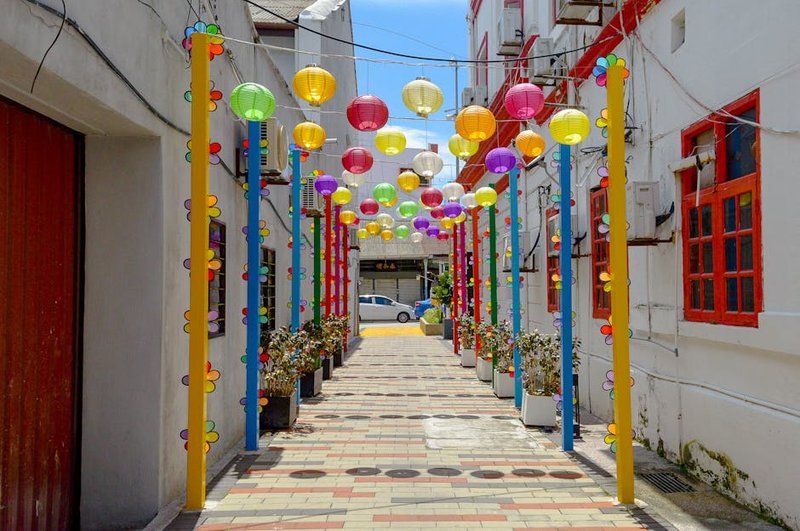
But long before Sir Francis Light claimed Penang, the hill was known to locals as Bukit Bendera (Flag Hill), allegedly named for the flags used by signal stations. Its significance was different—less about escape, more about perspective and presence. It was a geographical anchor, a constant on the skyline. This duality persists. The colonial bungalows, like “The Nest” or “Bel Retiro,” still stand, some privately owned, others slowly being consumed by the rainforest. Yet, the heart of the hill today is a bustling, decidedly Malaysian mix of souvenir shops, kopitiams, and the vibrant, sometimes chaotic, Rainbow Walk.
/images/penang_hill__bukit_bendera__a01b7fbb.jpeg)
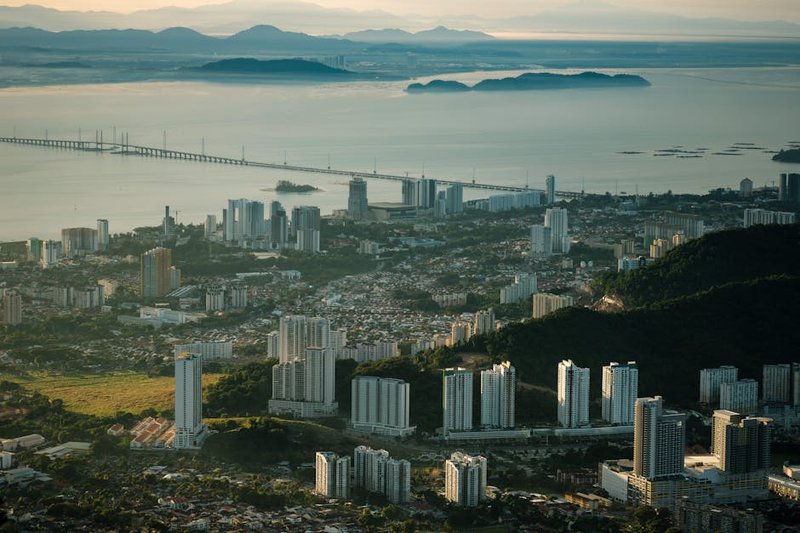
The most poignant symbol of this blend is the Curtis Crest Tree Top Walk, at the highest publicly accessible point. Here, you stand on a circular steel walkway amidst the canopy, with a 360-degree view that tells the whole story: the relentless modern sprawl of Georgetown and Butterworth, the blue thread of the Penang Strait, and the ancient, silent green of the hill’s own protected forest. It’s a place where history feels layered, not gone.
The Mechanics of the Ascent: More Than Just a Train Ride
Most people’s interaction with the hill’s “how” begins and ends with the funicular. And it is a feat. The current system, upgraded in 2010, is one of the steepest tunnel funiculars in the world. What fascinates me isn’t just the gradient, but the logistics. The train doesn’t just go up and down on a single track. There’s a passing loop in the middle where the two trains, operating on a counterweight system, gracefully slide past each other. It’s a perfectly choreographed ballet that happens dozens of times a day.
But the real “how” of Penang Hill is ecological. It’s an island within an island. The summit is a kerangas or heath forest, a unique ecosystem on acidic, sandy soil that’s poor in nutrients. This makes the flora up here specially adapted and incredibly fragile. The Penang Hill Corporation, which manages the site, has a tough job: facilitating hundreds of thousands of visitors while protecting this sensitive environment. Initiatives like the Habitat Penang Hill, a separate conservation-focused experience, show a conscious effort to offer an alternative that educates and preserves.
The Many Faces of the Hill: From Sunrise Chasers to Night Owls
People use Penang Hill in wildly different ways, and that’s its magic.
- The Dawn Pilgrimage: My favourite time to go is for sunrise. You catch the first train up in near-darkness, when the air is at its coldest and the only sounds are the waking birds. The crowd is a special breed—photographers with tripods, fitness enthusiasts, and a few contemplative souls sipping hot tea from a thermos. Watching the first light spill over the Central Range and ignite the windows of Georgetown is a spiritual experience. It’s the hill at its most peaceful and generous.
- The Family Day Out: By midday, the dynamic shifts completely. It’s a carnival atmosphere. Families queue for the funicular, kids run towards the Owl Museum or the Love Lock area, and everyone wants a photo with the iconic Penang Hill sign. The food court does a roaring trade in chendol and fried noodles. It’s noisy, lively, and represents the hill’s role as a accessible, affordable day out for locals and tourists alike.
- The Twilight Transition: As the day-trippers descend, a new crowd emerges. Couples and small groups come up for dinner at David Brown’s Restaurant & Tea Terrace, set in a beautiful colonial-era planter’s bungalow. The view transforms as the city lights begin to twinkle like a spilled jewel box. The night breeze is even cooler, and the hill feels intimate again.
I once helped a friend plan a surprise proposal at David Brown’s at dusk. He was nervous, worried it was too cliché. But as the sky turned peach and then indigo, and the first lights of the Penang Bridge glimmered in the distance, all clichés melted away. The hill provided a backdrop no five-star hotel balcony could match. It was a perfect example of its application as a place for milestone moments.
The Trade-Off: What You Gain and What You Give Up
The advantages of Penang Hill are obvious: that glorious cool climate, the panoramic views, the unique blend of nature and history, and its accessibility from the city. It’s a one-stop shop for experiencing a different side of Penang.
The disadvantages, however, are almost entirely born from its success. Crowds. On public holidays or weekends, the queue for the funicular can snake for hours. The summit, particularly around the Rainbow Walk, can feel as crowded as a pasar malam. This density can shatter the tranquility you came seeking. Prices for food and souvenirs at the top are noticeably higher than down in Air Itam. And there’s a lingering tension—if you stray from the main paved paths, you see litter tucked under ferns, a sad reminder of the impact of mass tourism.
Lessons from the Queue: Pitfalls and Best Practices
Through trial and error, I’ve learned how to have a good hill experience and how to avoid a miserable one.
The Cardinal Mistake: Assuming you can just “pop up” on a Saturday afternoon. You can’t. You’ll waste half your day in a queue.
Best Practices I’ve Adopted:
- Go Early or Go Late: Aim for the first train (6:30 AM) or go after 4 PM. The light is better for photos, the crowds are thinner, and the temperature is pleasant.
- Buy Tickets Online: This is non-negotiable. Skip the ticket queue entirely. The Penang Hill Corporation’s website or app lets you book a specific time slot.
- Wear Proper Shoes: If you plan to walk to Monkey Cup Garden or the Habitat, the paths can be steep and slippery. Flip-flops are a recipe for a twisted ankle.
- Hydrate, But Plan Your Bathrooms: Bring water, but know that public restrooms at the summit can have long lines. Use the facilities at the Lower Station before you ascend.
- Look Beyond the Main Square: Most people cluster within 100 meters of the Upper Station. Walk five minutes towards the old bungalows or the Habitat entrance, and you’ll find quiet, shaded lanes.
- Manage Your Expectations: The famous “cool breeze” is real, but on a still, overcast day, the difference is less dramatic. It’s a hill, not a mountain.
A personal anecdote: I once took a group of European journalists up for sunset. I’d booked tickets, we went late, and it was glorious. As we descended, the night train was packed with families coming up for the night view. One of the journalists, seeing the long queue now going up, turned to me and said, “You didn’t just show us a nice view. You showed us how to time it.” That’s the key.
The Alternatives: Is There Another Way?
When the queues are prohibitive, people look for options. Some opt for the Jeep Track trail, a steep, strenuous hike up the service road that takes a few hours. It’s free and offers a great workout, but it’s not for the faint-hearted, you’re sharing the narrow road with service vehicles, and you arrive sweaty and tired at the top.
Others might consider Kek Lok Si Temple in Air Itam for elevated views, but it’s a different kind of experience—architectural and religious rather than natural. For a pure, crowd-free nature fix, the Penang National Park at Teluk Bahang offers fantastic hiking and beaches, but no panoramic city vistas.
Penang Hill’s unique selling point is that it combines the natural and the urban panorama so seamlessly. The alternatives offer slices of the experience, but not the whole pie.
The Path Ahead: Conservation, Capacity, and the Visitor Experience
The future of Penang Hill hinges on a critical question: how do you preserve the soul of the place while managing the sheer volume of people who want to experience it?
I’m encouraged by the shift towards conservation-focused offerings like The Habitat. It acts as a pressure valve, drawing some visitors towards a more educational, lower-impact experience. The proposed Cable Car project, often debated, is a double-edged sword. It would move more people faster, alleviating the funicular queue, but risks turning the hill into a mere transit point and increasing summit congestion exponentially. Any future development must be meticulously planned with a carrying capacity in mind.
What I hope for is a future where the hill’s different “modes” are better managed. Perhaps more dawn and dusk slots, curated night tours focusing on astronomy or nocturnal wildlife, and a stronger emphasis on the network of quieter jungle paths. The hill needs to be more than a viewpoint; it needs to remain an ecosystem.
Penang Hill, for me, is a living barometer. Its breeze tells me the weather, its crowds tell me the season, and its ever-changing face—from misty dawn to glittering night—tells me a story about Penang itself. It’s a place of juxtapositions: colonial history and modern kitsch, serene forest and bustling food stalls, exhausting queues and moments of absolute peace.
It has taught me patience (through those queues), respect (for its fragile ecology), and the value of timing. My relationship with it is complex—I lament the crowds I’m inevitably a part of, but I’ll always return for that first cool breath of air at the top, for the way the world falls away and reveals itself as a map.
If you go, don’t just go for the Instagram shot. Go for the feeling in your lungs on that first step out of the station. Go for the quiet corners. Go with a plan. See it not as a checklist item, but as the island’s quiet, watchful heart, beating at a cooler, slower pace. Just remember to book your ticket online first. Trust me on that one.
/images/penang_hill__bukit_bendera__5eba4858.jpeg)