The Sky Mirror: More Than Just a Reflection
I remember the first time I saw a photograph of the Sky Mirror in Kuala Lumpur. It wasn’t the gleaming Petronas Towers that caught my eye, but this strange, disc-like object lying flat in the plaza, perfectly capturing the sky and the iconic spires in its surface. It looked like a portal, a piece of the heavens brought down to earth. Years later, when I finally stood before Anish Kapoor’s Cloud Gate in Chicago—its spiritual cousin—I felt that same disorienting wonder. But my professional fascination with the concept of the “sky mirror” really began not with art, but with a problem on a remote construction site.
We were surveying a vast, uneven tract of land for a solar farm project. The traditional topographical maps and drone flyovers were giving us data, but they lacked a certain intuitive, holistic view of how light would travel across the terrain throughout the day. A colleague, half-joking, said, “What we need is a giant mirror to see the sky’s path from the ground’s perspective.” That offhand comment sent me down a rabbit hole. I began researching not just the artistic installations, but the broader principle of using reflective surfaces to capture, study, and interact with the sky. What I found was a fascinating intersection of art, environmental science, urban design, and pure human curiosity.

From Ancient Pools to Modern Marvels: A Brief Reflection on History
The desire to capture the sky is as old as humanity itself. Our ancestors saw the heavens reflected in still ponds, in polished obsidian, and in the first crude metal mirrors. This wasn’t just vanity; it was a form of understanding. The sky was the domain of gods and weather, and to hold a piece of it was to exert a tiny measure of control or communion.
The modern sky mirror as a deliberate artistic or architectural statement has its roots in the Land Art movement of the 1960s and 70s. Artists like Robert Smithson with his Spiral Jetty or Walter De Maria with The Lightning Field were already using the landscape itself as a canvas, engaging directly with natural forces. The logical next step was to bring the sky into the equation more directly. By placing a massive, perfectly level reflective surface on the ground, artists created a new plane of existence. The ground ceased to be just ground; it became a thin skin separating two versions of the sky.
Anish Kapoor’s work, particularly Cloud Gate (affectionately known as “The Bean”) and his touring Sky Mirror installations, brought this concept to the global mainstream. These aren’t passive objects. They are social catalysts. People don’t just look at them; they interact with them, taking selfies, pointing, lying down to see their reflection against the clouds. The mirror becomes a stage for human experience, framed by the ever-changing theater of the atmosphere.
How the Illusion Works: It’s All About the Curve
Most people assume a sky mirror is just a giant, flat, polished disc. If only it were that simple. A truly flat mirror on the ground would show a very narrow, specific slice of sky directly above it. To create that immersive, bowl-of-heavens effect, you need curvature.
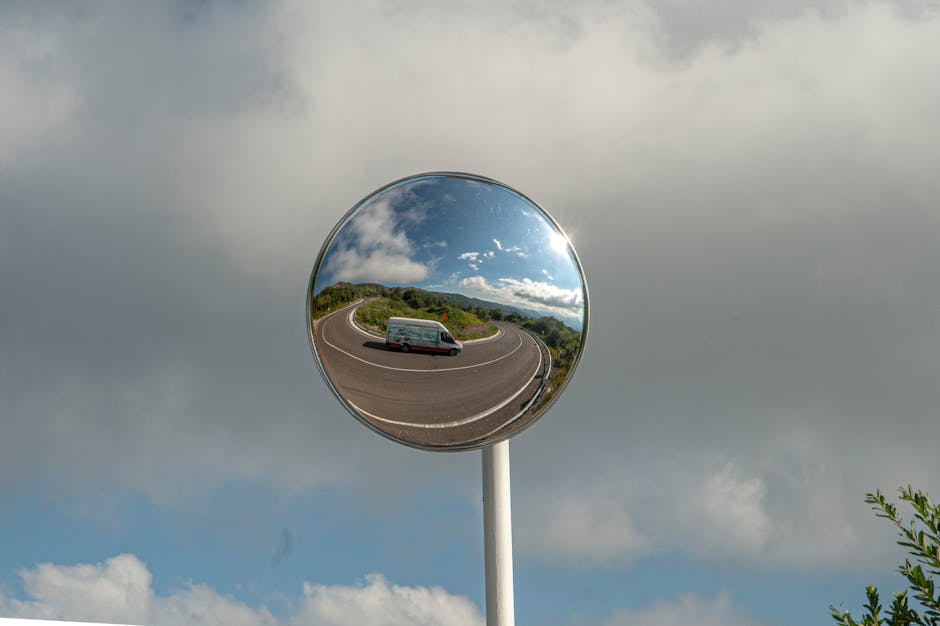
The most effective large-scale sky mirrors are slightly concave. Think of a very shallow, very wide satellite dish. This concave shape is the magic trick. It allows the surface to gather light from a much wider swath of the sky and focus it toward a viewer standing at its edge or center. The polishing is another marvel of engineering. It’s not like buffing your bathroom mirror. These surfaces are made from high-grade, stainless steel (like Kapoor’s work) or sometimes precision-polished aluminum. They undergo a meticulous multi-stage polishing process to achieve a near-optical perfection, eliminating any distortion or “orange peel” effect that would break the illusion. The final step is often a clear protective coating to guard against environmental wear and the fingerprints of countless admirers.
The installation is a feat of civil engineering. The base must be perfectly level and incredibly stable. Even a slight settlement or tilt would distort the reflection, turning the sky into a funhouse mirror. I’ve seen smaller-scale prototypes fail because the concrete pad beneath them wasn’t cured properly, leading to microscopic shifts that ruined the effect.
Beyond the Selfie: Practical Applications in a Reflective World
While the artistic installations are the most visible examples, the principle of the sky mirror has fascinating and practical applications that extend far beyond the plaza.
1. Environmental Monitoring and Public Engagement: This is where my own interest was piqued. I consulted on a project for an urban park in a city with significant light pollution and air quality issues. We proposed a permanent, moderately sized sky mirror, not just as art, but as a living barometer. Next to it, we installed simple data displays showing real-time particulate matter (PM2.5) levels and ambient light readings. The mirror became the interface. On a clear, clean day, the reflection was sharp and deep blue. On a hazy, polluted day, it was a dull, washed-out gray. Citizens could see the air quality. It transformed abstract data into a visceral, understandable experience, fostering a much deeper connection to environmental issues. You can read more about this approach in our piece on Environmental Art as Data Visualization.
2. Architectural and Urban Design: Sky mirrors are powerful tools for studying light. Before breaking ground on a dense urban development, some forward-thinking firms use temporary, large-scale reflective films or movable mirror installations to model how sunlight will penetrate courtyards, how shadows will fall, and how the building will interact with the skyline. It’s a dynamic, real-world alternative to purely computer-generated simulations. I once saw a design team use a series of truck-mounted mirrors to track the sun’s path across a proposed building site over an entire day—the data they collected was invaluable for optimizing window placement and public space design.
3. Psychological and Therapeutic Spaces: There’s a profound calming effect to lying back and watching clouds drift across a mirrored ground. Some progressive healthcare and wellness centers are experimenting with small-scale sky mirror rooms or courtyards. For patients dealing with anxiety, or for people in urban environments with little access to open sky, these spaces provide a unique form of visual therapy, creating a sense of expanded space and connection to the natural world above.
The Flip Side: Challenges and Pitfalls
For all its beauty, working with sky mirrors is not without its headaches. Here are some hard-learned lessons:
- The Maintenance Monster: A sky mirror is a commitment. It’s a giant, horizontal fingerprint magnet. Rain leaves spots, dust accumulates, and in public spaces, people will walk on it, scuff it, and leave gum. The polished stainless steel used by Kapoor is relatively resilient, but it still requires daily cleaning with specialized, non-abrasive solutions to maintain its clarity. I’ve seen installations where maintenance was an afterthought, and within months, they became cloudy, streaked eyesores.
- Safety and Accessibility: A perfectly reflective surface can be a hazard. When wet, it becomes extremely slippery. In bright sunlight, it can create intense glare or even focal points of heat. Designing safe edges, incorporating non-slip perimeter materials, and considering sun angles are critical. Furthermore, the highly reflective surface can be disorienting for people with certain visual impairments or vestibular disorders—an important inclusivity consideration often overlooked.
- The “Instagram Effect” vs. Artistic Intent: There’s a tension between an artist’s vision and the public’s use. Kapoor’s Cloud Gate is a masterpiece of form and reflection, but for most visitors, it’s a backdrop for a selfie. This isn’t necessarily bad—it democratizes the art—but it can overshadow the more contemplative experience the artist may have intended. As a designer, you have to accept and plan for how people will actually use the space, not just how you wish they would.
A Personal Case Study: The Community Sky Map
My most rewarding project involved a small town that had lost its community center. The new building was modern and functional, but the plaza in front of it was a barren expanse of concrete. The council wanted something that would “bring people together and make them look up.”
We proposed a community “Sky Map.” Instead of one large mirror, we designed a cluster of 12 smaller, circular polished granite mirrors (more durable than metal for this context), each about a meter in diameter, set flush into the plaza in a loose constellation. Each one was subtly angled differently. One might perfectly frame the old church steeple. Another was tilted to catch the sunrise on the summer solstice. A third was positioned so children could lie down and see only sky and treetops.
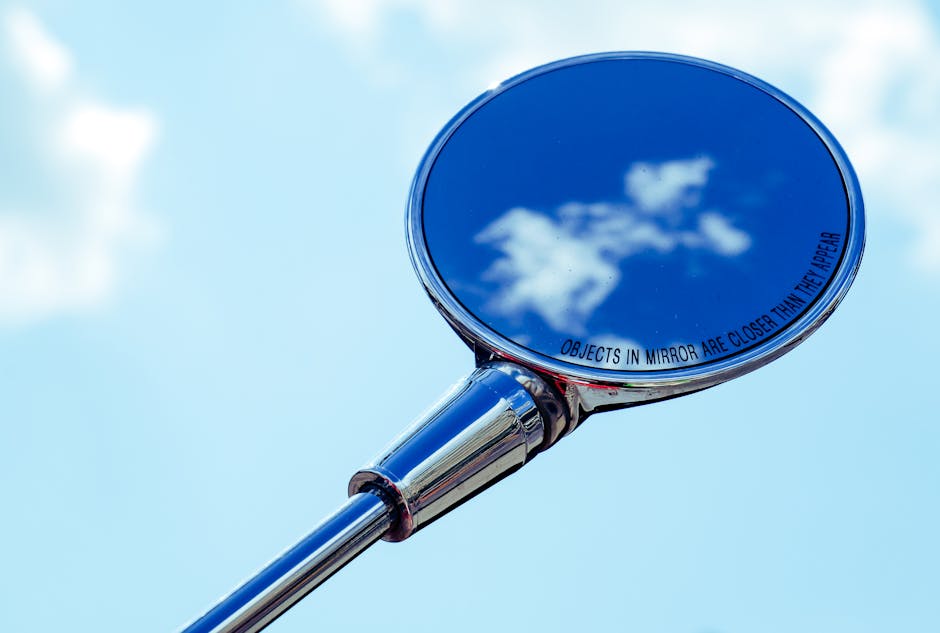
The engagement was magical. People didn’t just take photos; they explored. They moved from disc to disc, discovering the different framed views. Local schoolteachers used it for science lessons about light and reflection. It became a wayfinder, a talking point, a unique landmark. It worked because it was scaled to the community, durable, and interactive in a way a single, massive, don’t-touch-it sculpture could never be. The key lesson here was engagement over awe. Sometimes, a collection of smaller, thoughtful interventions can be more powerful than one monumental one. For insights on scaling such projects, our guide on Public Art on a Municipal Budget has some relevant strategies.
Looking Forward: The Future is Reflective
The future of sky mirrors lies in smarter materials and adaptive design. I’m following research into electrochromic glass that could change its reflectivity based on the time of day or weather conditions—imagine a mirror that becomes transparent at night to reveal LED patterns beneath, or one that tints to reduce glare at noon. There’s also work on self-cleaning nanocoatings that could drastically reduce the maintenance burden.
Furthermore, I believe we’ll see more integration with renewable energy. Could a sky mirror double as a subtle solar concentrator, channeling light to a peripheral collector? Could its surface be embedded with photovoltaic cells so thin they don’t disrupt the reflection? The intersection of aesthetic form and environmental function is where the most exciting innovations will happen.
Ultimately, the power of the sky mirror is its simplicity. In a world saturated with digital screens and virtual realities, it offers a profound analog experience. It requires no battery, no software update, no explanation. It simply takes the oldest, most vast thing we know—the sky—and gives us a new way to see it, literally under our feet. It reminds us that wonder doesn’t always require complex technology; sometimes, it just requires a shift in perspective, a willingness to look down to see up. My journey from that solar farm problem to designing community mirrors has taught me that this simple principle is one of the most powerful tools we have for connecting people to their environment and to each other. It’s a lesson in humility, in observation, and in the endless creativity that springs from looking at the world—and the sky—just a little differently.